Coconut Rhinoceros Beetle
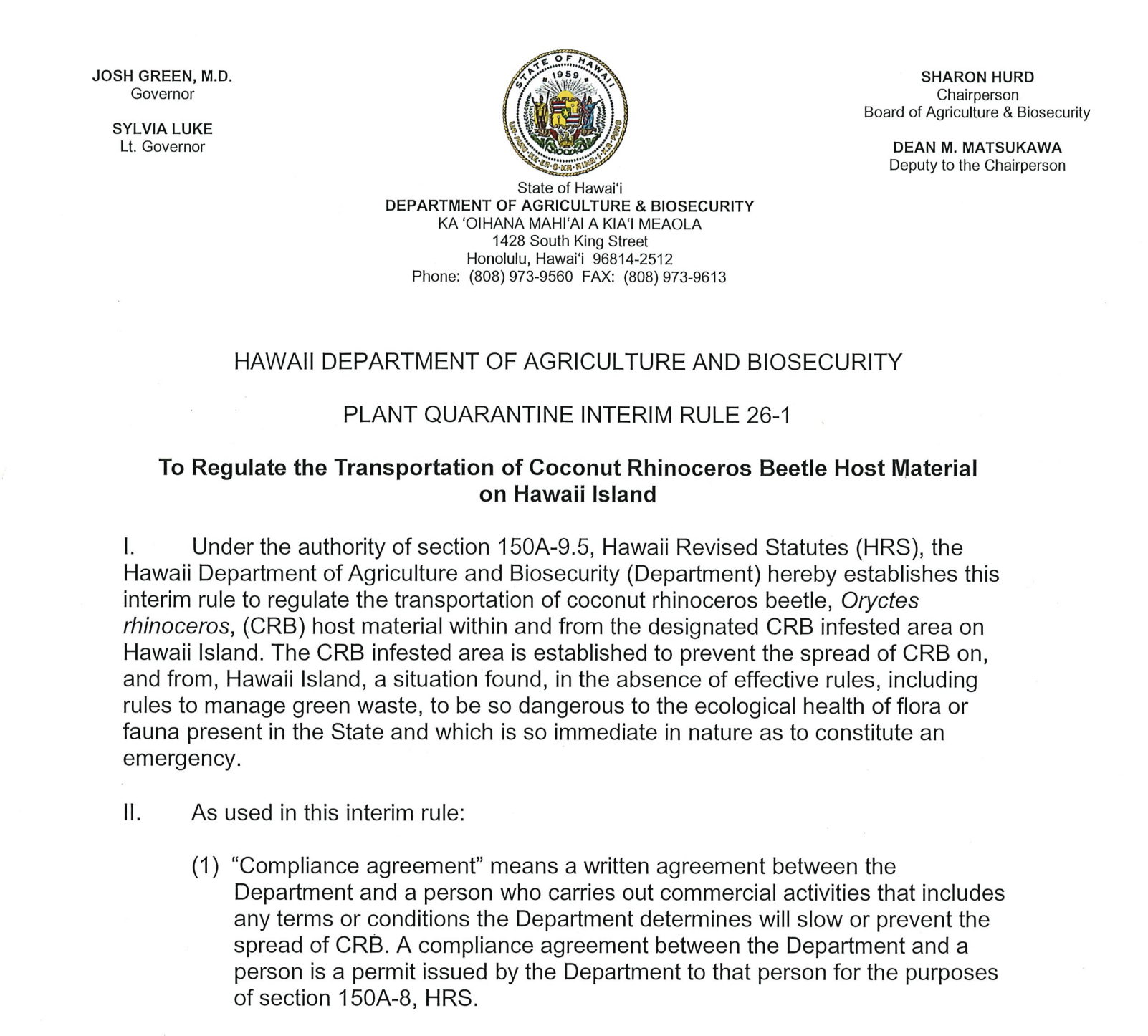
Coconut Rhinoceros Beetle
Species Name: Oryctes rhinoceros
Please report CRB or suspect palm damage immediately!
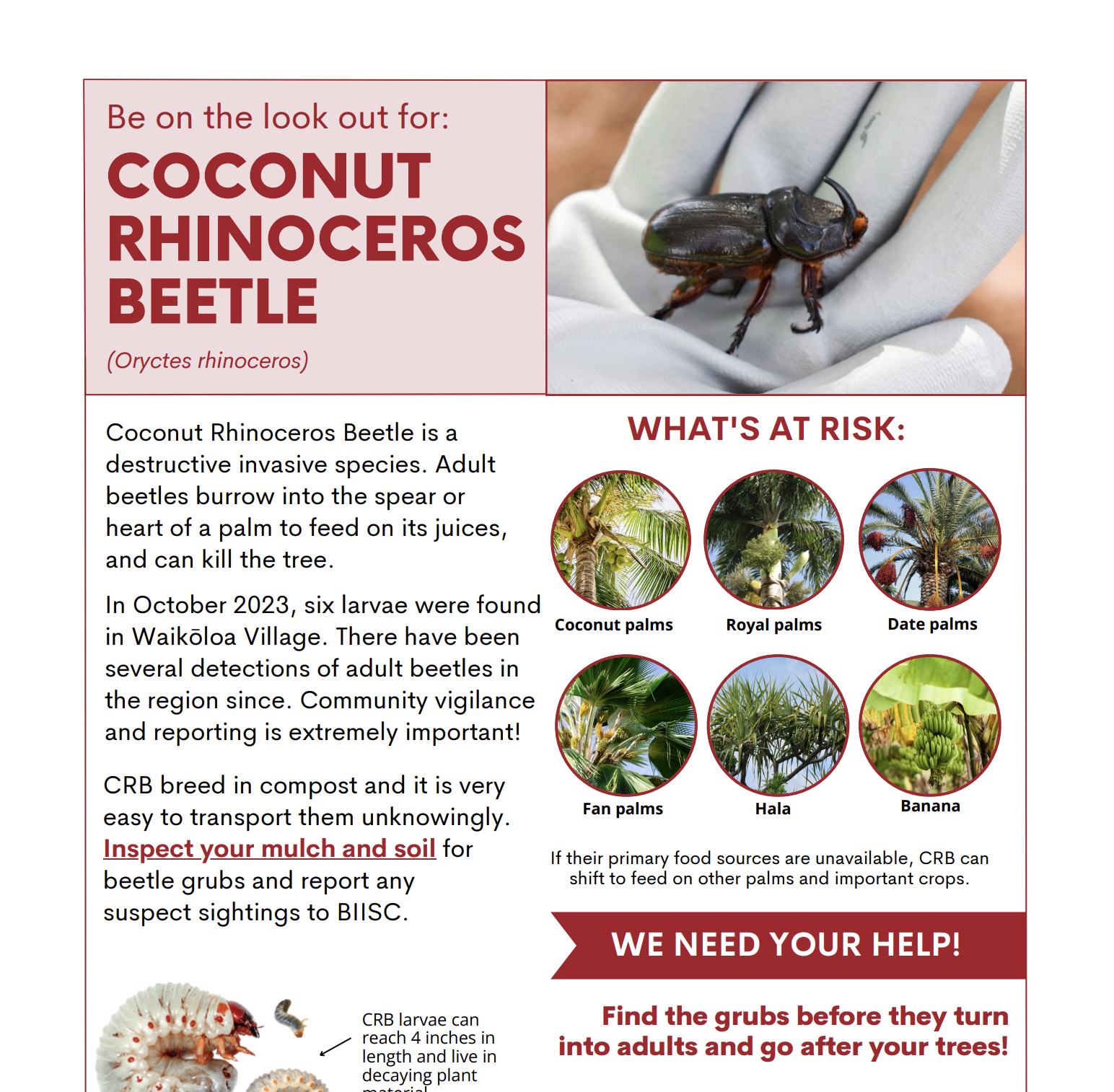
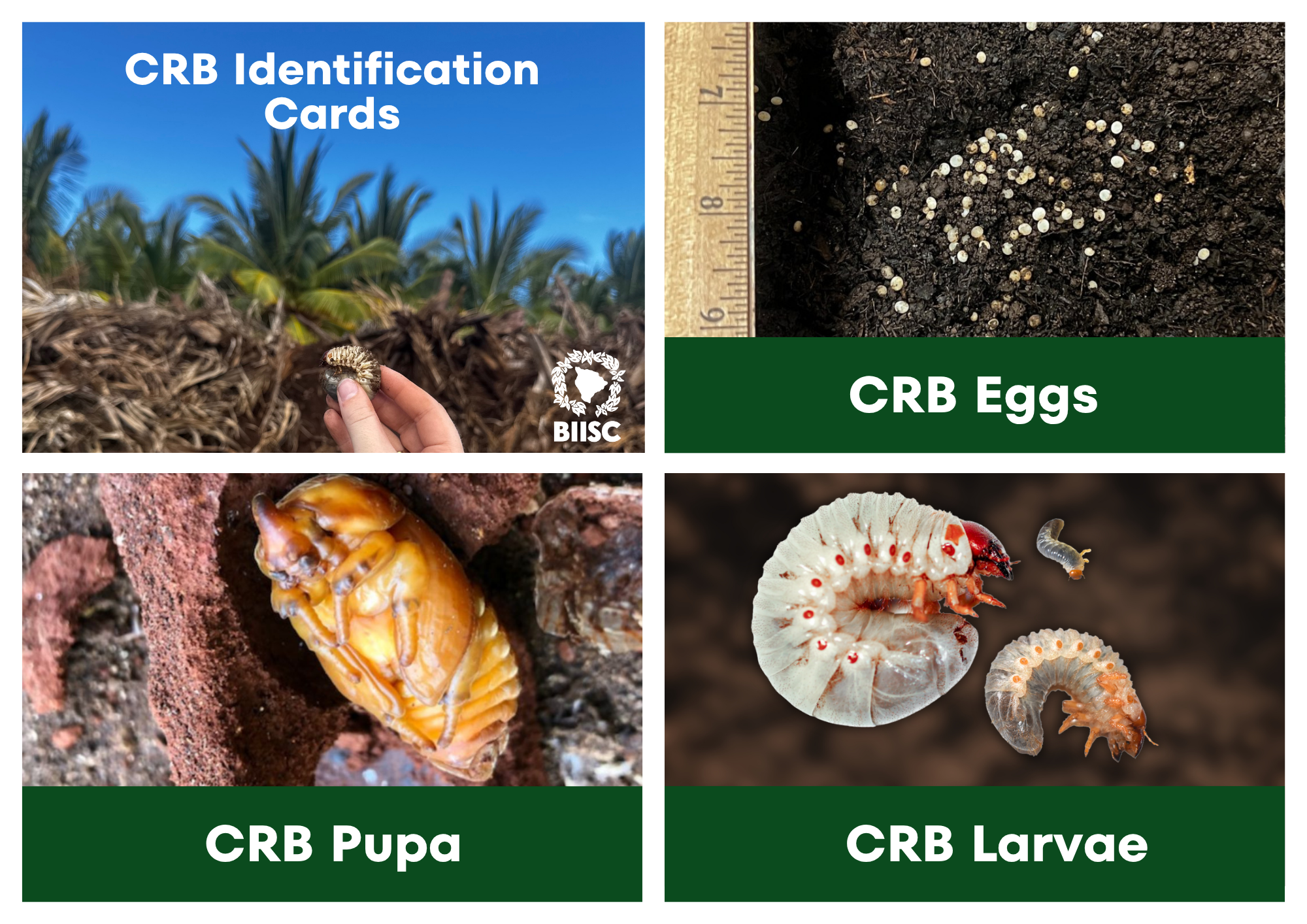
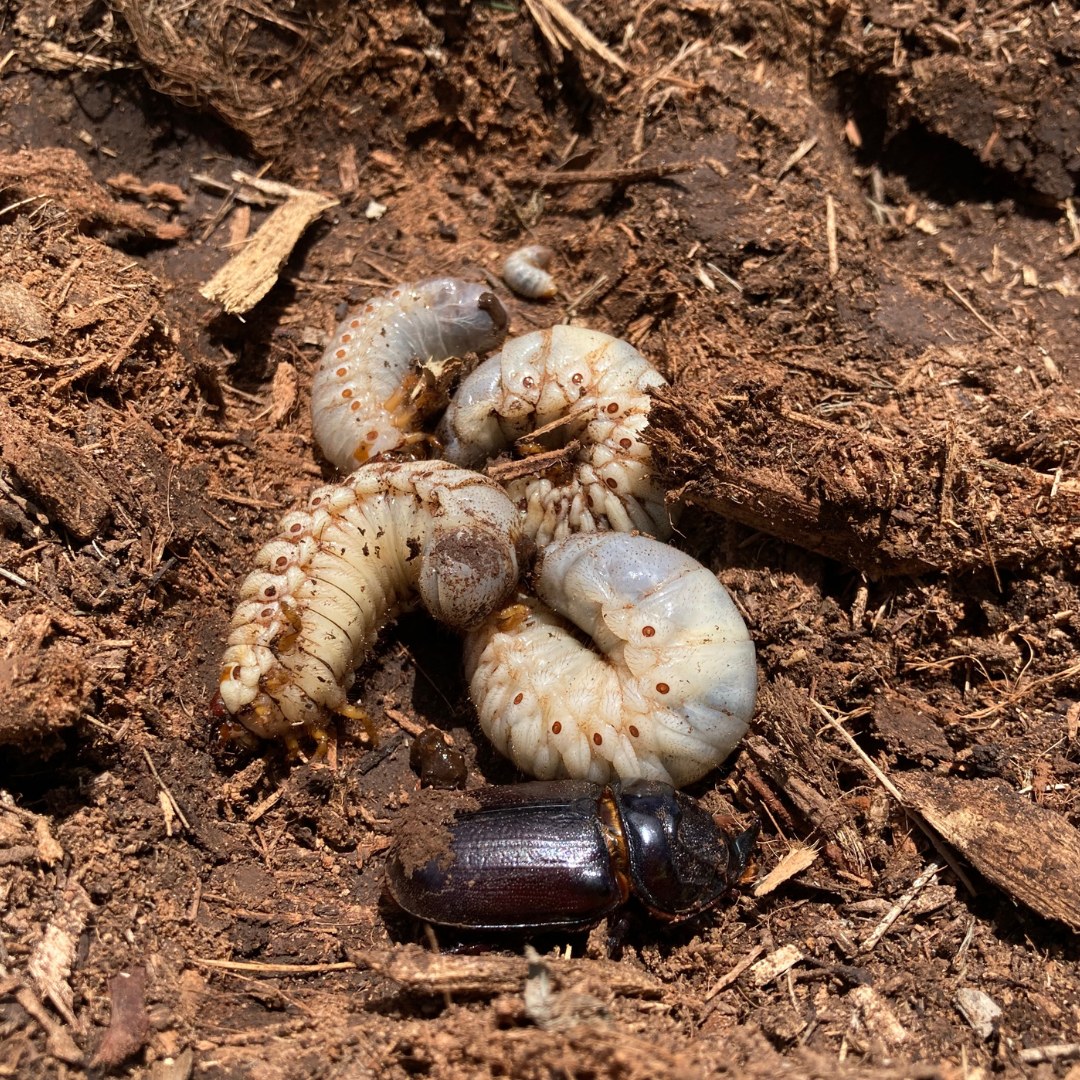
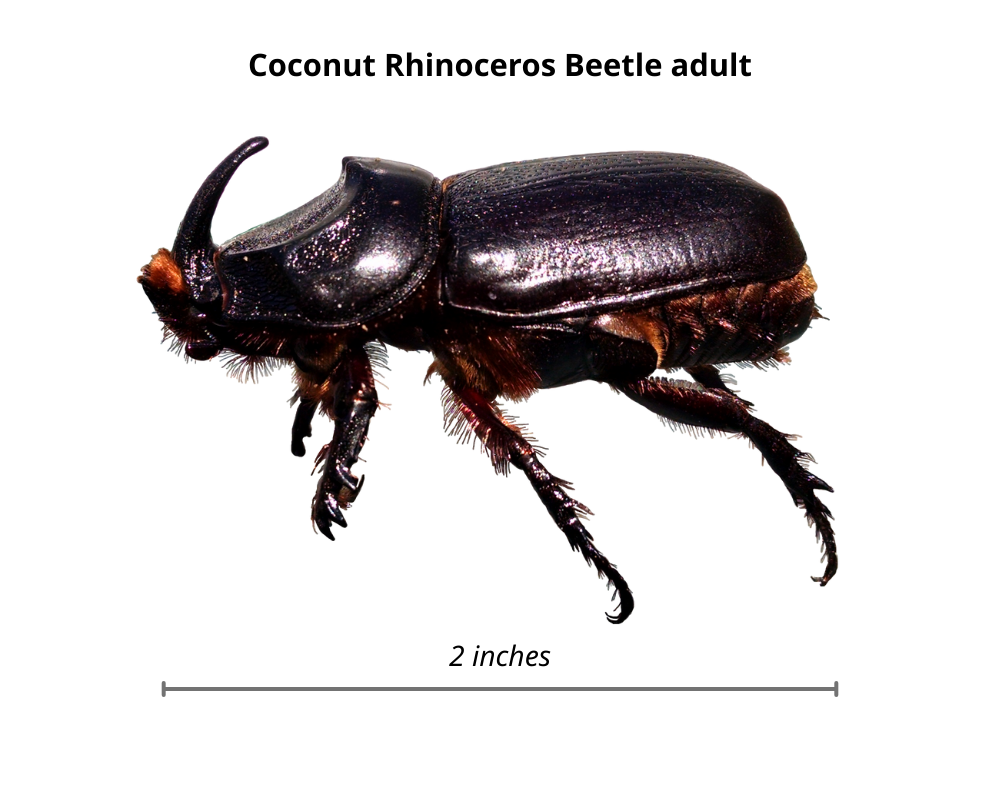
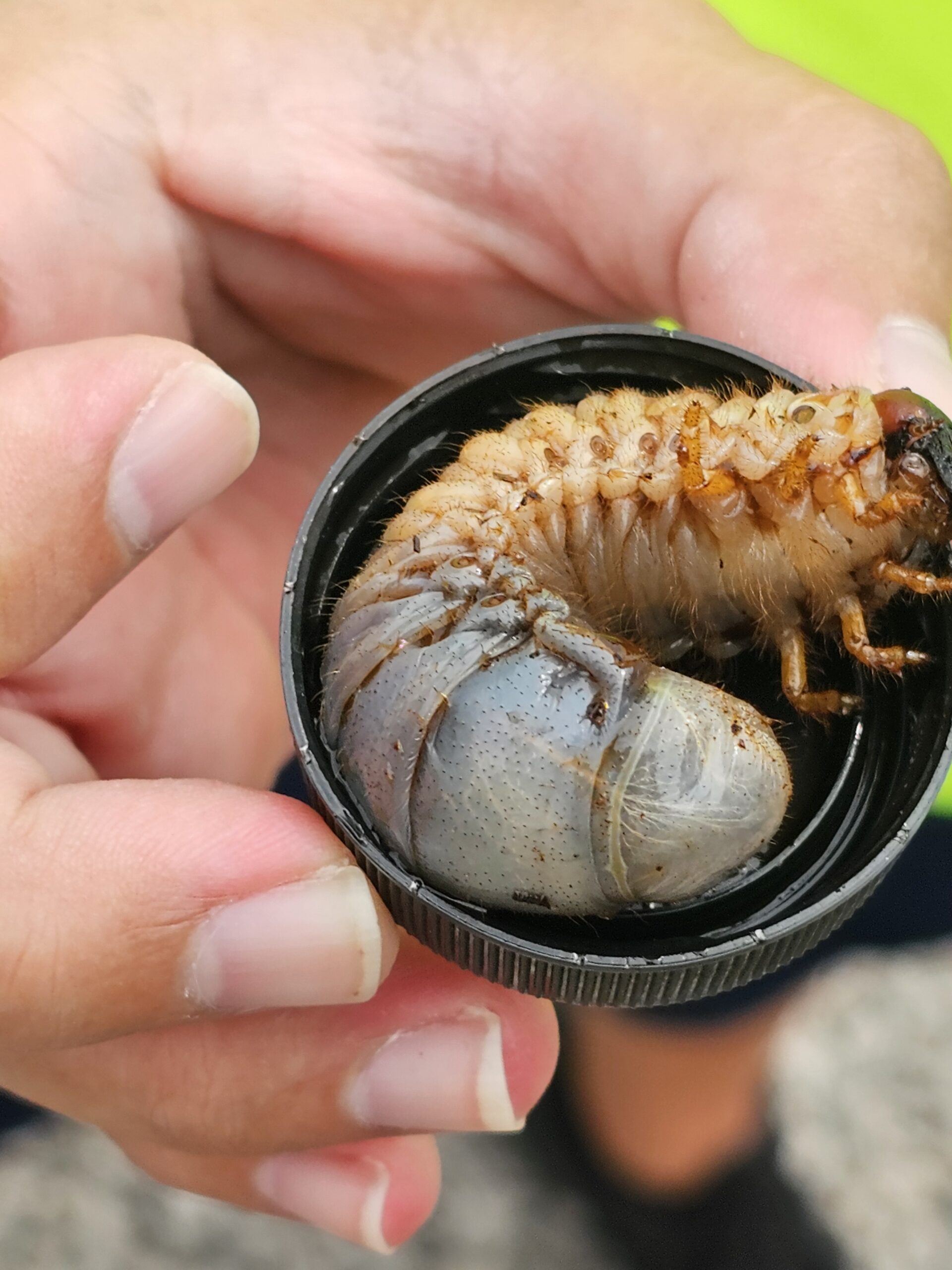
Coconut rhinoceros beetle (CRB) was detected in North Kona in March 2025, and we need your help to stop the spread. Coconut rhinoceros beetles are black with brown fuzz and measure around 1.5-2 inches long. Their most distinct feature is the single long horn. Adult beetles are nocturnal, so it’s rare to see one flying around during the day. Their grubs are much easier to find and live in compost and decaying plant matter. The larvae are off-white with a brownish head capsule – they start off small but can grow up to 3.5 inches long.
Report CRB

Current Status
What You Can Do
The Coconut Rhinoceros Beetle (Oryctes rhinoceros) is an invasive insect that poses a significant threat to coconut palms, other palm species, and the broader agricultural landscape in Hawaiʻi. Originally native to Southeast Asia, the beetle has become an invasive pest across many Pacific islands, causing widespread damage to coconut palms and other palms. Adult beetles bore into the crowns of palms, feeding on sap and damaging the growing tissue, which can severely stunt growth or even kill the tree.
Understanding the biology, behavior, and pathways of spread is essential for developing effective management strategies. Continued vigilance on Hawaiʻi Island is necessary to protect native ecosystems, maintain agricultural productivity, and preserve the cultural and economic value of palms across Hawai’i.
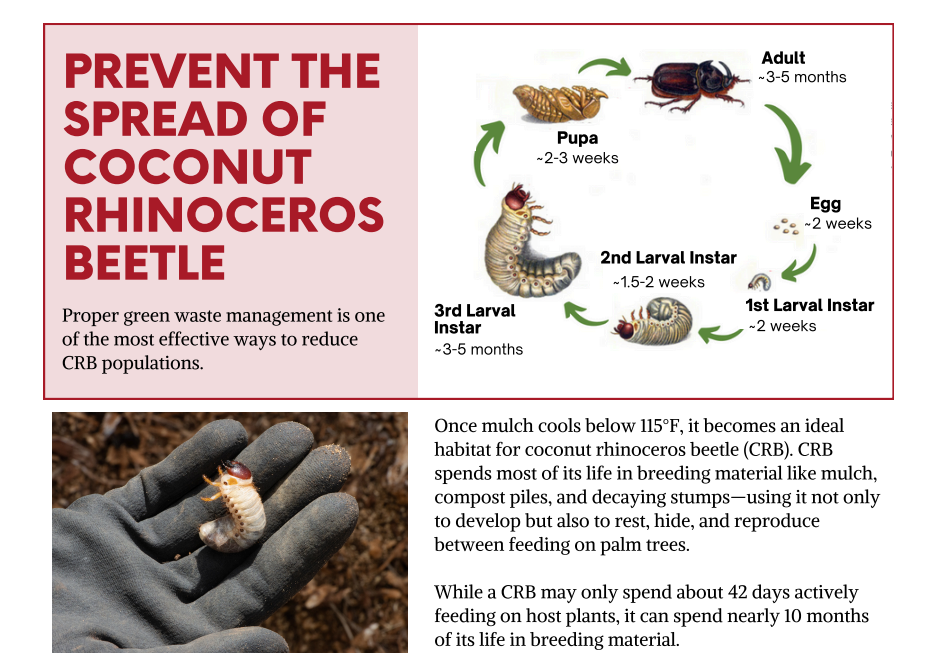
CRB Life Cycle
The Coconut Rhinoceros Beetle undergoes a complete metamorphosis, progressing through four stages: egg, larva, pupa, and adult. Female beetles lay eggs in decaying organic matter, such as compost, mulch, or rotting logs. The eggs hatch into larvae, which are white grubs that feed on the decomposing material for several months. After pupating, the beetles emerge as fully formed adults, ready to feed on palm crowns.
Understanding the beetle’s life cycle is critical for targeting control measures at vulnerable stages, such as removing breeding sites or treating larval habitats to prevent new adults from emerging.
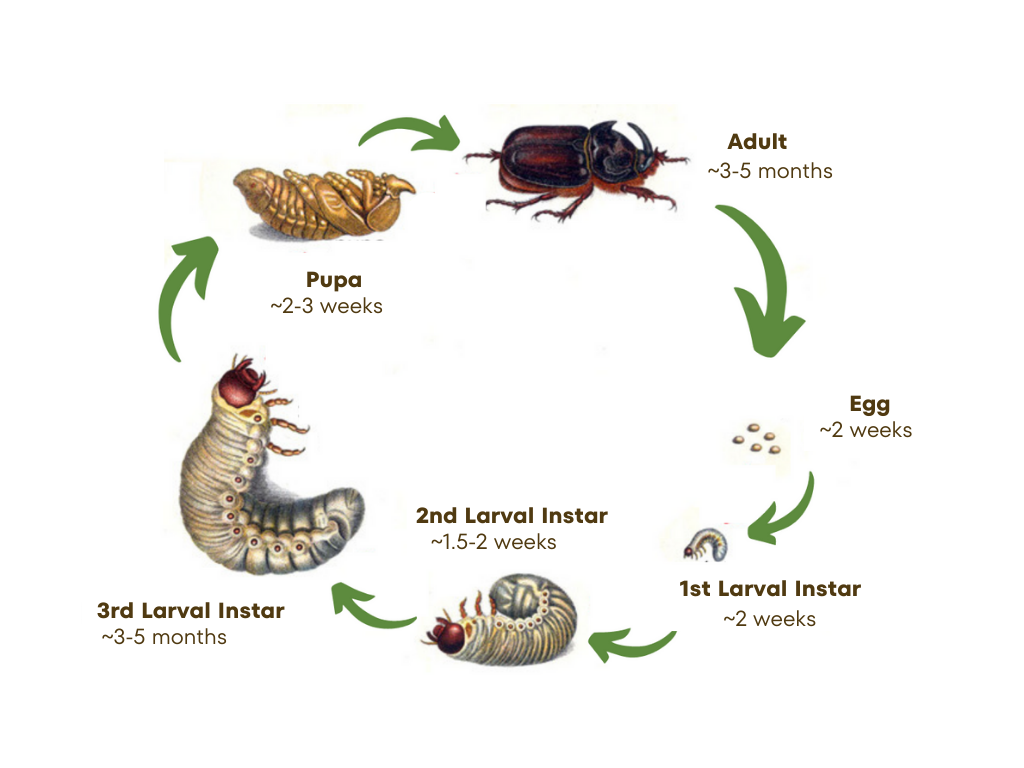
The majority of a coconut rhinoceros beetle’s lifespan is spent in breeding material like compost piles, mulch, and decaying stumps. Once a CRB emerges as an adult, it spends about 4-8 days feeding in palms, followed by 10-20 days away from the tree. That means over its entire life — from egg to adult — a CRB spends roughly 42 days in host plants and a staggering 285 days in breeding material.
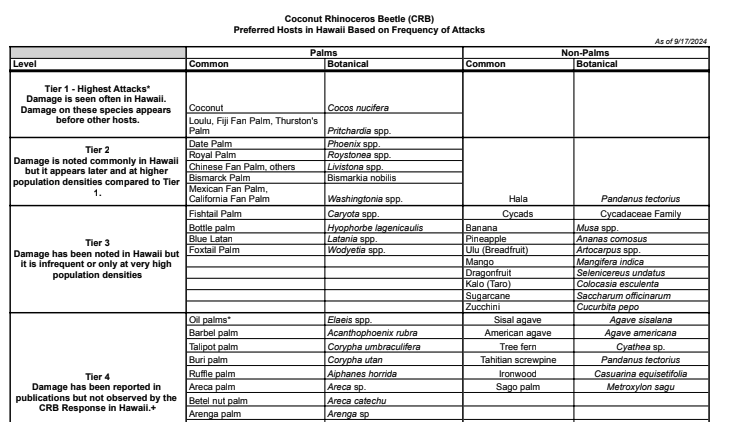
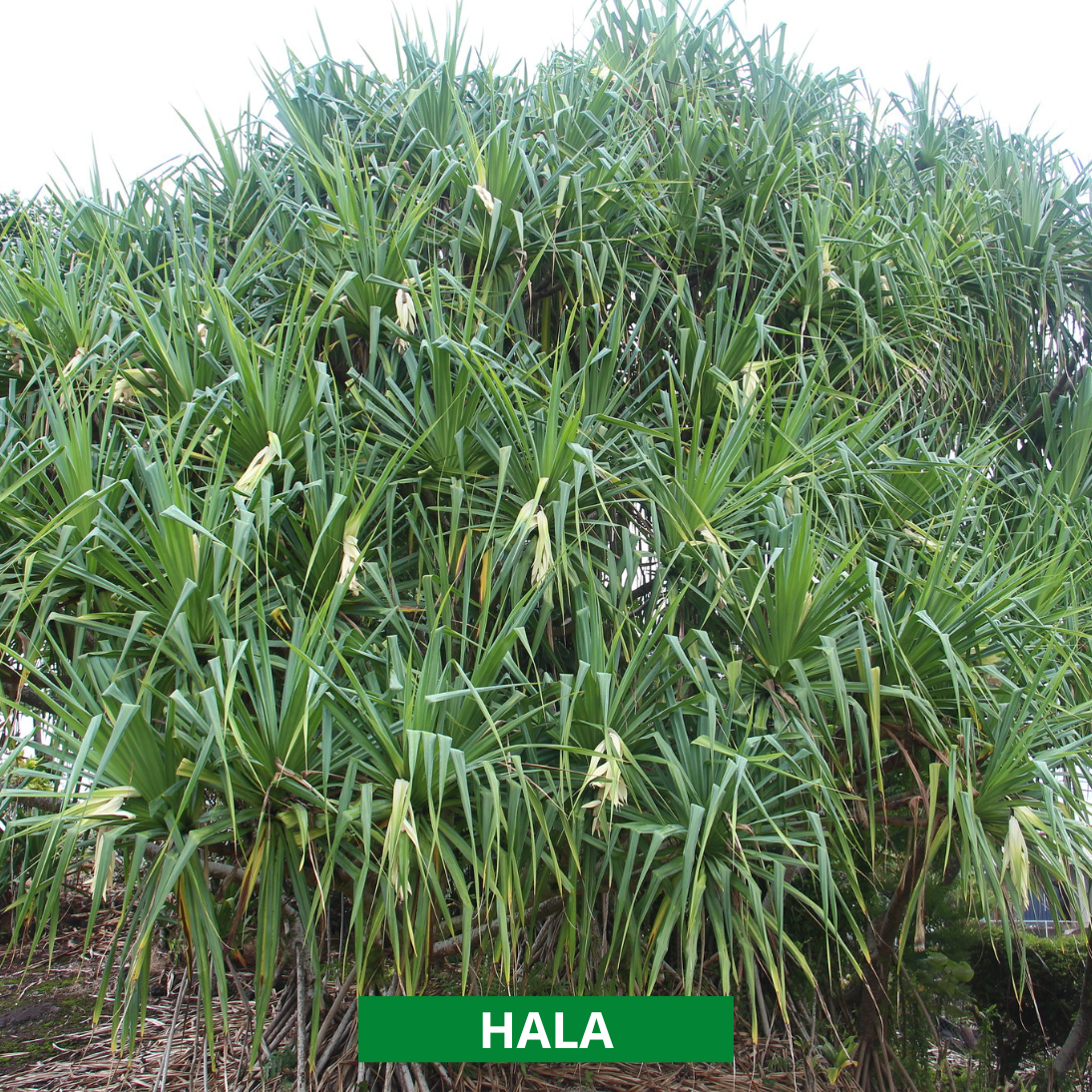
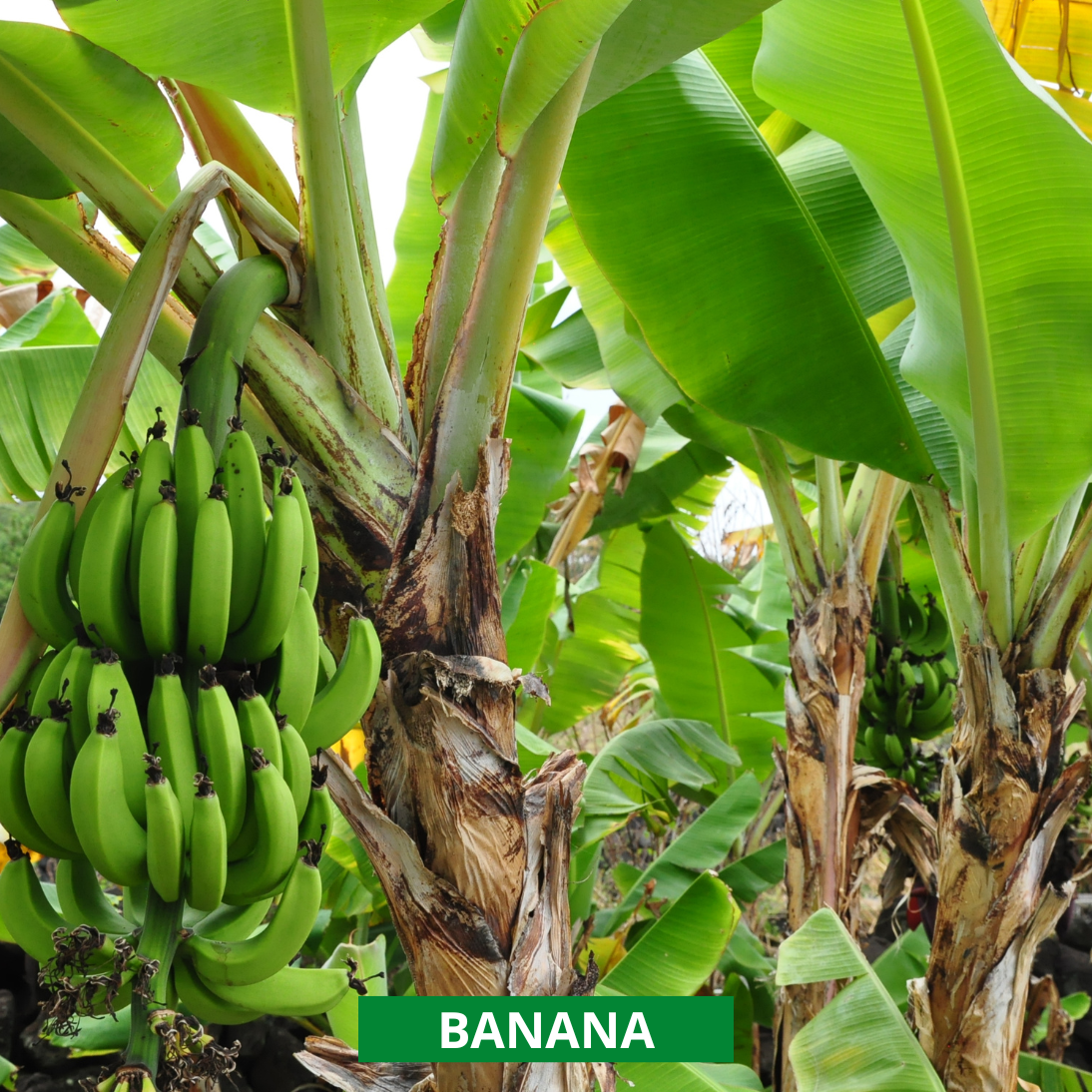
CRB Host Species:
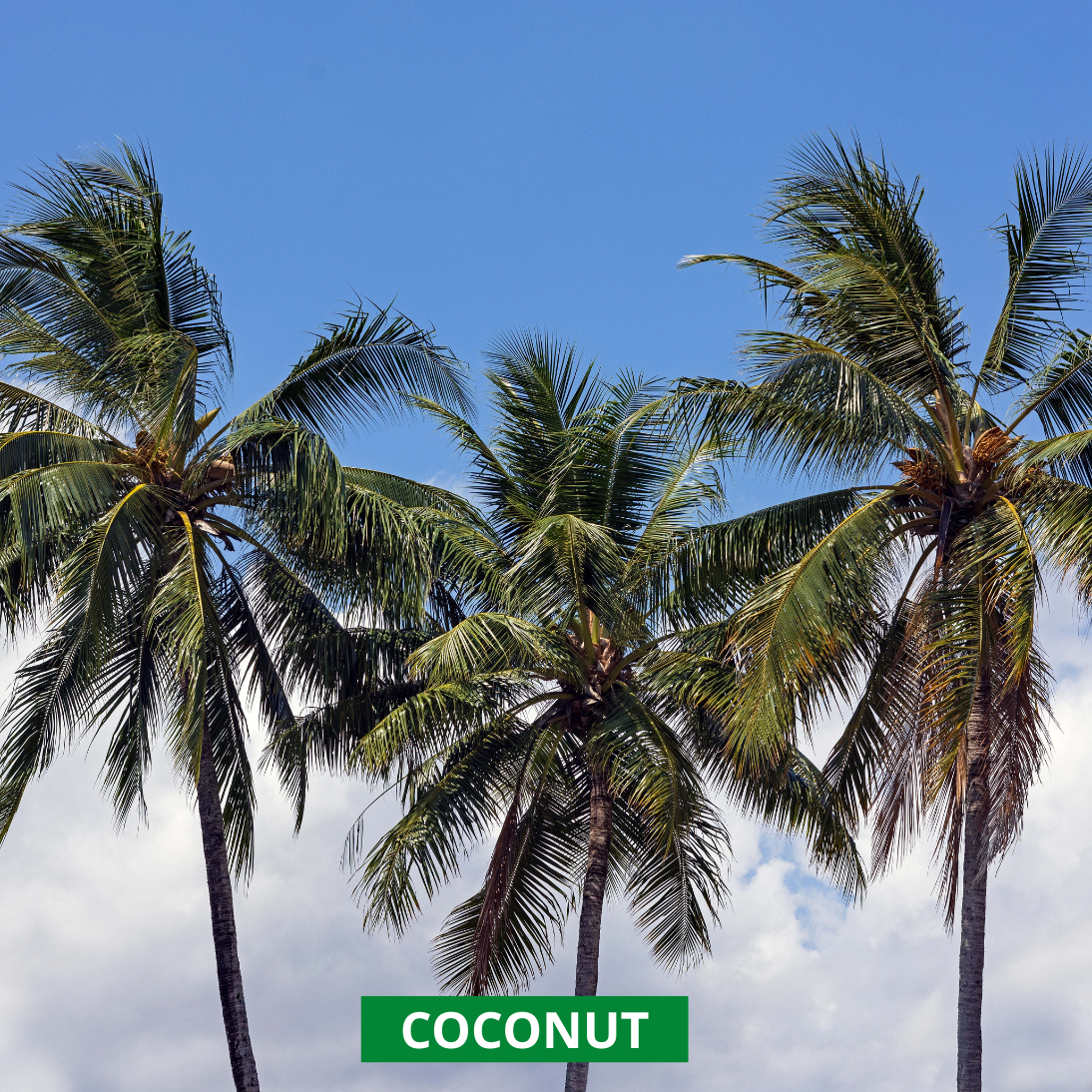
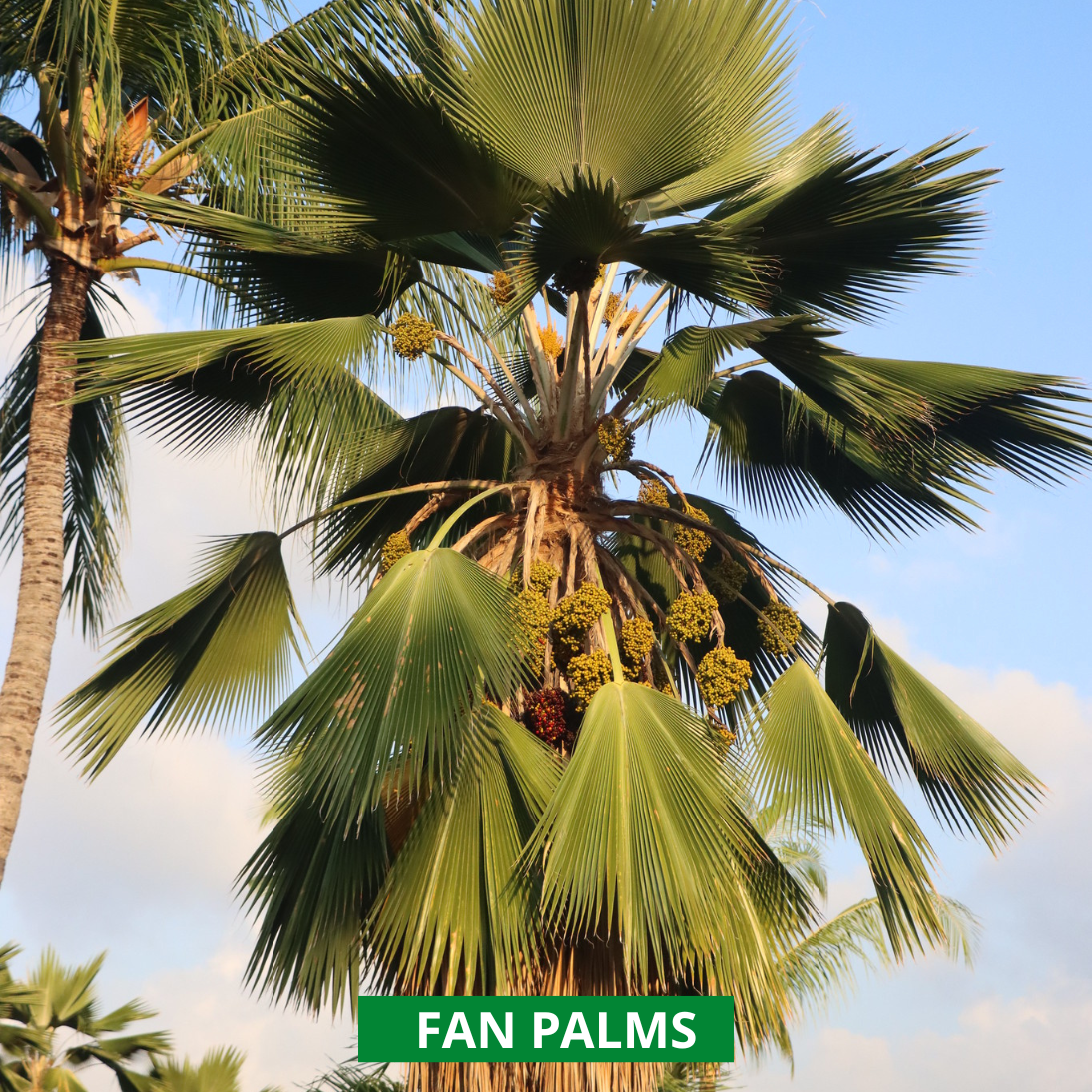
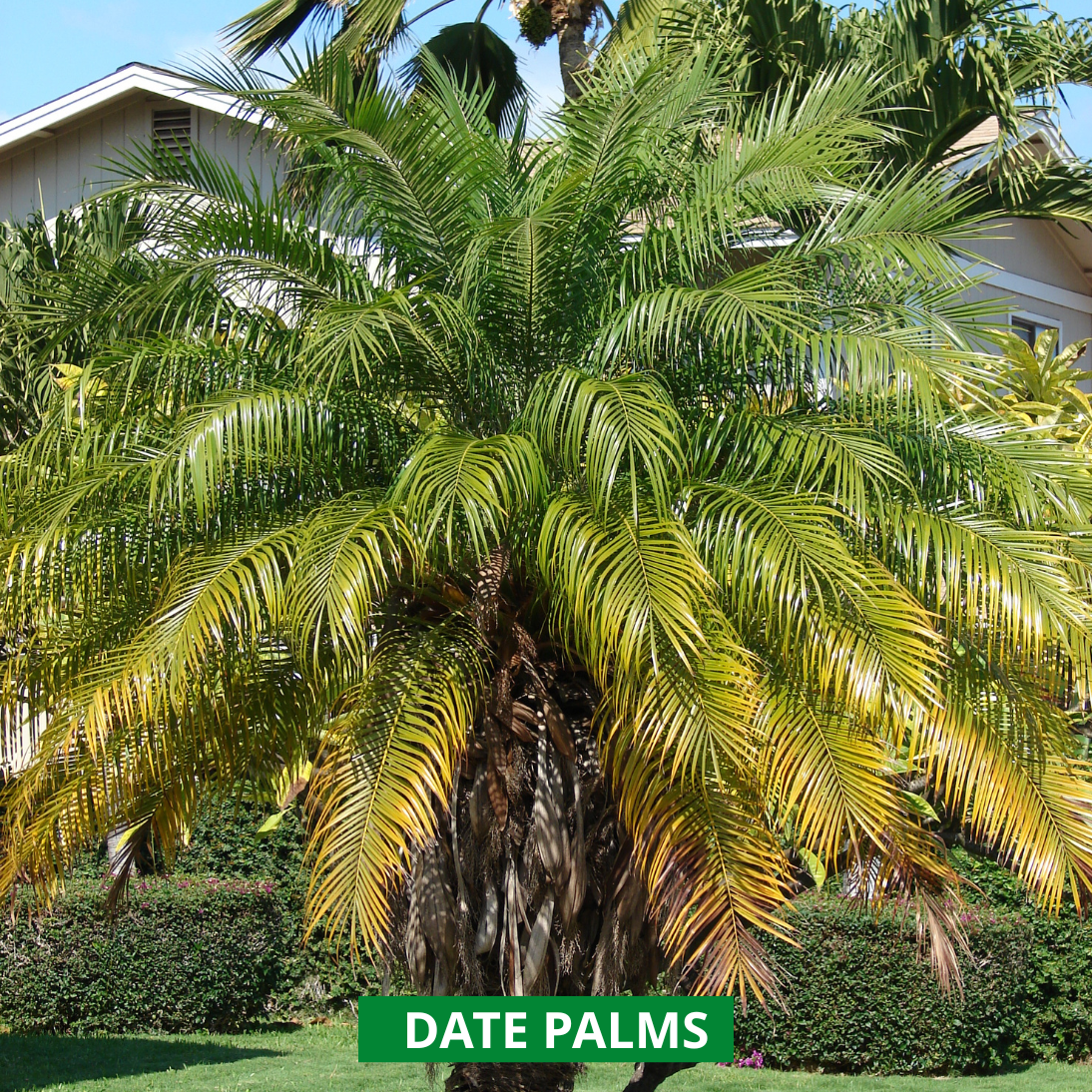
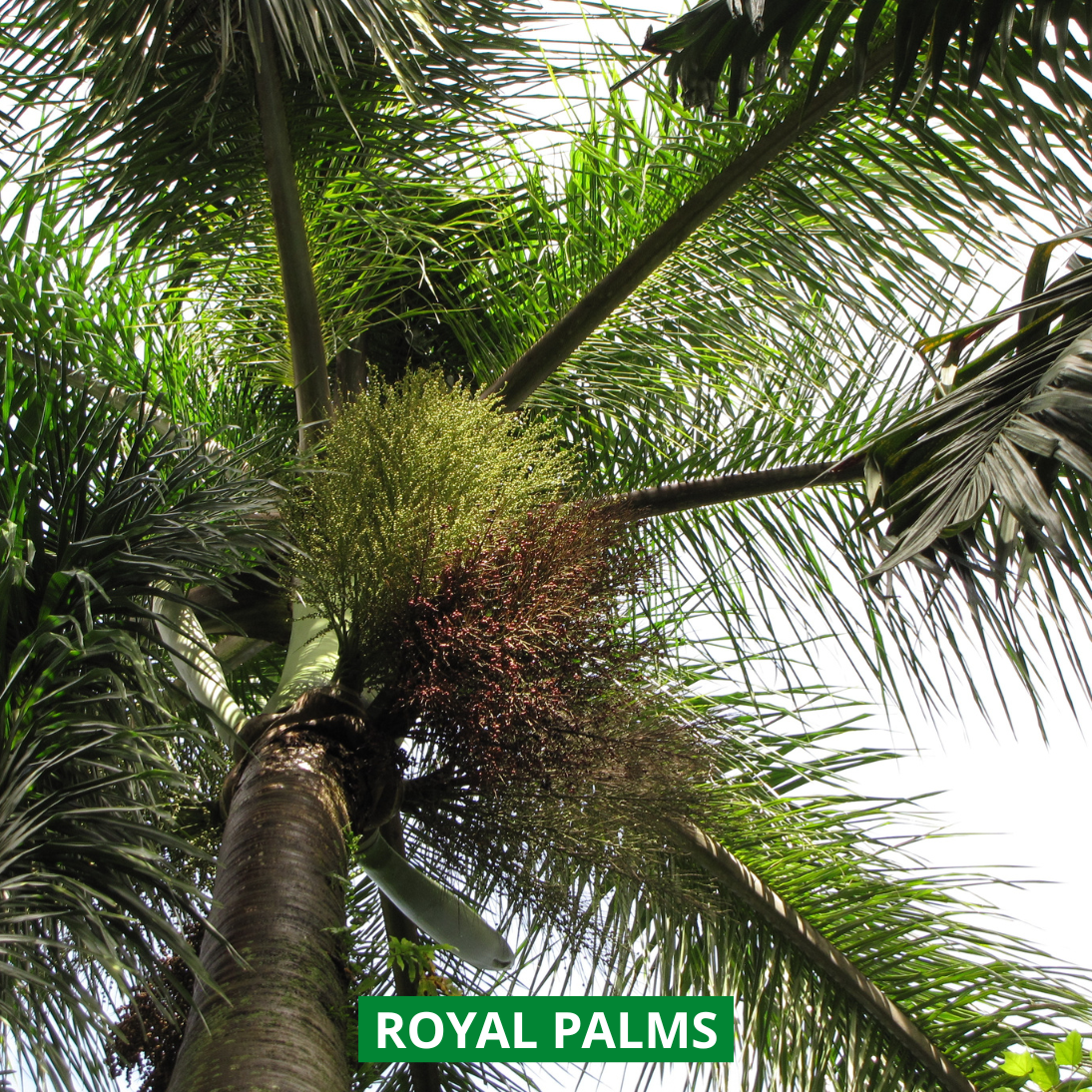
Click here for a full list of CRB hosts
CRB FAQ’s
What is the Coconut rhinoceros beetle?
CRB (Oryctes rhinoceros) are a scarab beetle that has been causing problems all around the world. This beetle is native to Southeast Asia and has been spreading throughout the Pacific. Easily identified by its size (adults are about 2 inches) and notable horn. Adult beetles attack the growing spear of palm trees to feed on sap.
What do CRB eat?
While CRB prefers coconut trees they do go after other palms. In high populations on Oahu they have been noted going after non-palm plants like hala and pineapple.
What does a CRB damaged tree look like?
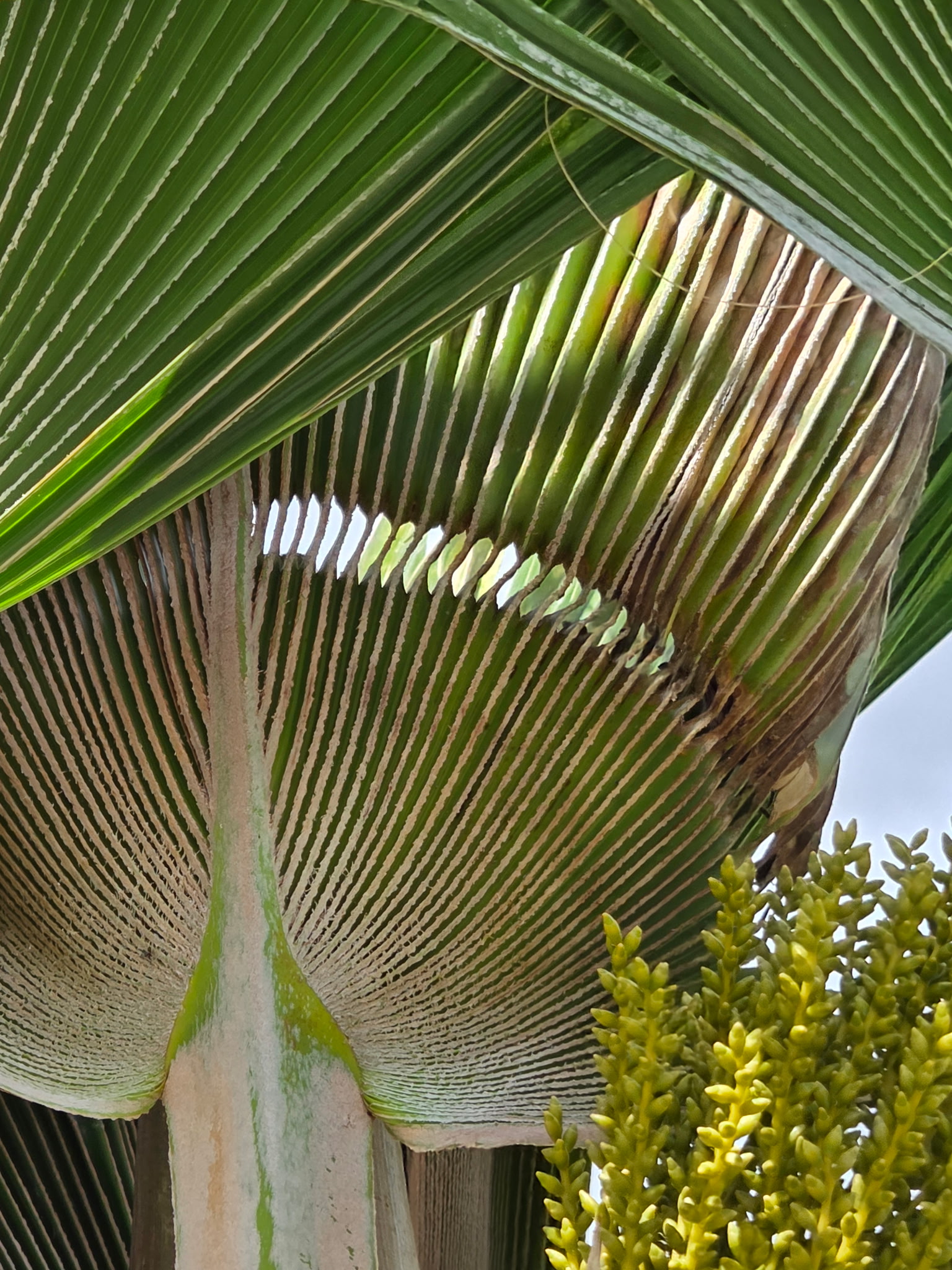
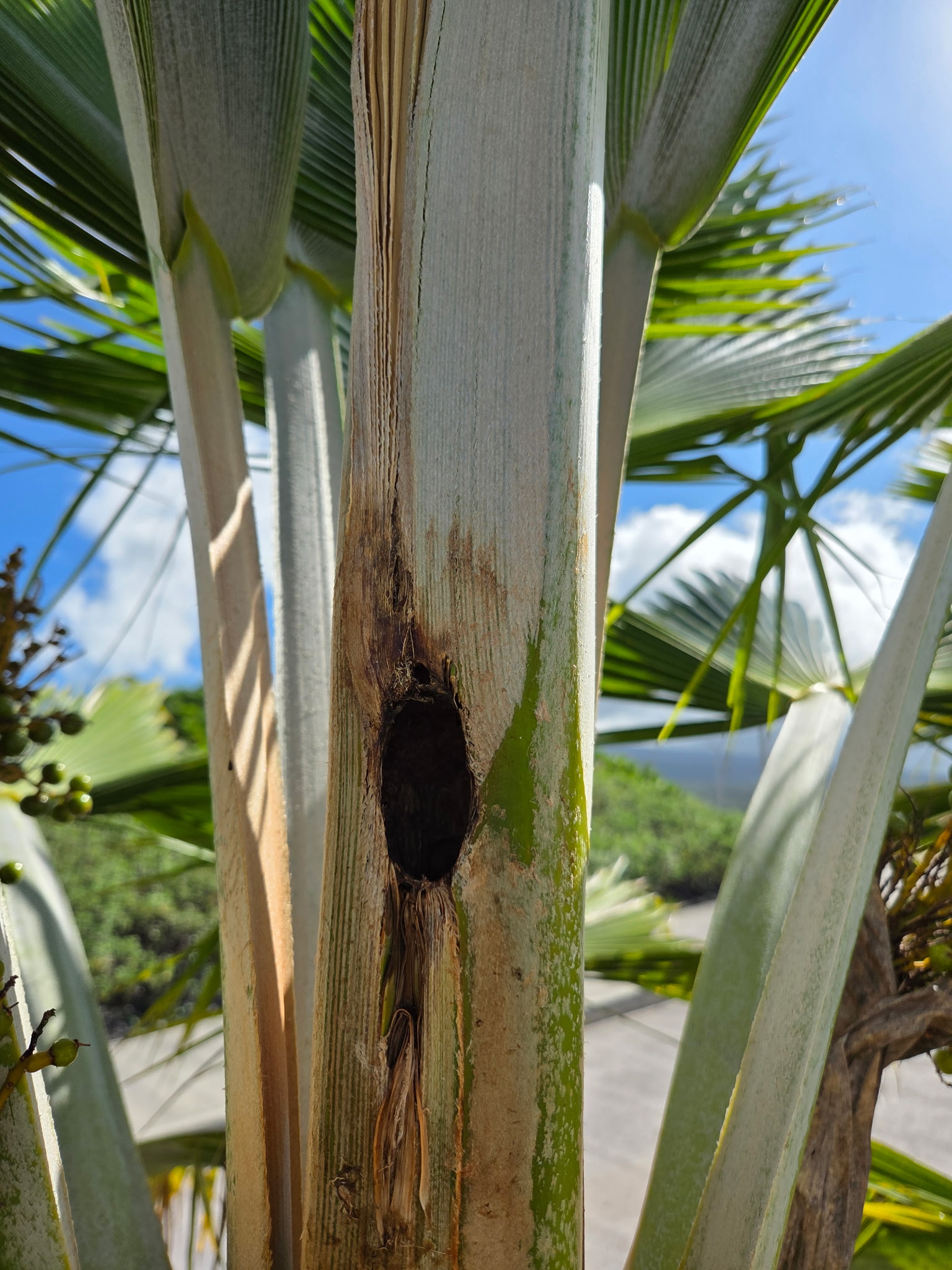
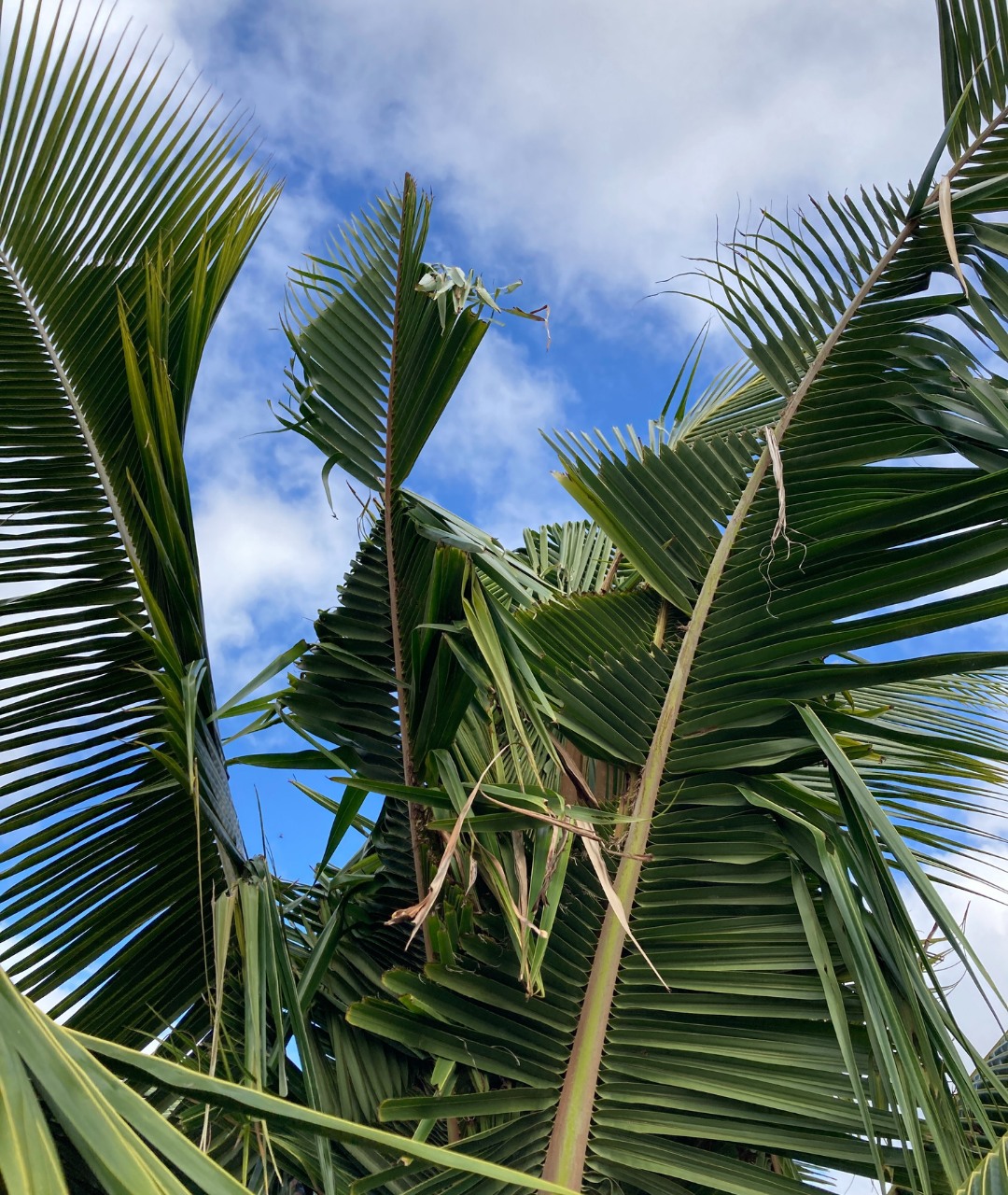
Because CRB are digging into the growing spear of the tree they damage the new fronds. When these damaged fronds open up, the cut up leaves unfurl making the v-cut shape. But these v-cuts can also look very similar to rat or trimmer damage. When CRB makes these v-cuts the edges of each frond tend to be scalloped (half circle). Rat damage is tattered or shredded and trimmer damage is straight. Something that is more iconic to CRB damage is large 2 inch bore holes in the stems of the fronds. Sometimes the hole is split between two fronds so it may be a half circle at the edge of the stem. When a CRB attacks a tree you normally won’t see the damage for a few months as the damaged frond needs to emerge and become visible.
How long will it take a CRB to kill my tree?
The time can vary but it normally takes a long time and multiple attacks to kill a coconut. If you are unlucky and a CRB burrows all the way down to the meristem or palm heart and destroys it, that will kill a palm as that is where all the new leaves originate from. These large holes in trees also make the palm vulnerable to other pathogens and disease. But normal healthy trees can handle some CRB damage. If your tree dies very quickly and the whole crown dies or gets droopy or discolored that is most likely from disease and not CRB.
Baby CRB?
CRB, like all beetles, go through complete metamorphosis. Like how caterpillars become butterflies. CRB start off as grubs, pupate, and emerge as fully grown beetles. Once the beetle emerges they don’t grow any more. If you find a smaller black beetle or one without a horn it is a completely different species of beetle.
Baby or immature CRB grubs are found in compost, mulch, or decaying plant material. These grubs are pale white with a brown head capsule. They start off very small but can reach up to 3 inches in length. Grubs of the scarab family look very similar to each other so there are a few other grubs that very closely resemble CRB larvae. If you see grubs that look similar to CRB please collect them in a container with some soil and take pictures/videos of them and report them to us! DO NOT SQUISH THEM BEFORE WE CAN ID THEM!
What do the black plastic CRB traps do?
You may have seen these black panel traps on Oahu or other places trying to manage CRB. These traps are used for DETECTION. They are not a control method. These traps let us know if/where CRB are spreading. The pheromone lure on the traps do not have a far range so they are not drawing the beetles to new locations. If a beetle is found in a trap that indicates that the beetle was already in the area.
Most common look-a-like?
The most common beetle that gets mixed up with CRB is the Oriental Flower Beetle (Protaetia orientalis). The adults can be seen flying around during the day; it can look like a carpenter beetle in flight. CRB are nocturnal and you might come across a beetle at night or dusk. OFB are a dark brown with copper specs, and no horn. But the grubs are very similar looking. The main difference between them is that OFB has a raster line on its butt, a smaller head capsule, and can tuck its head into it’s abdomen making an e-shape. CRB don’t have a raster line, has a huge head, and are too fat to completely tuck their heads in. The other easy thing to ID is that OFB tend to crawl upside down and can escape relatively quickly. CRB are slow and stay on their side.
Do tree injections have potential to poison soil/ground water?
Tree injections actually have the lowest possible chance of drift or off target effects. Plants absorb water and nutrients through its roots and rarely expel water from the roots, so it’s unlikely that the pesticide will leach out from the roots. There may be some leakage while doing the injection but this amount is very minimal. In terms of cost and labor, injections are time consuming. The applicator has to go slowly as they can only input the injection as fast as the tree can take it up. But they do last longer compared to a drench or crown spray so injections happen less often.
Tree injections poisoning food source?
On the news there has been a concern that the tree injections are poisoning a possible food source. But the trees that are being treated are in areas that are regularly trimmed and maintained. Places with a lot of foot traffic have to have the flowers and nuts removed or risk the chance of them falling on someone. These treated trees are being used as an ornamental plant and not a food resource.
If you have a coconut tree that you are harvesting from there are other methods besides injections that can be used to manage CRB.
What is the treatment for trees that you intend to harvest from?
Evergreen Pyrethrum Concentrate (organic) are easily attainable by the homeowner and can be used on fruiting trees. This breaks down quickly in the environment. Best applied when you think there is active feeding going on. If you don’t want to use pesticides you can also use netting (½ inch – 1 inch holes). The netting needs to be wrapped around the crown and spear in multiple ‘fluffy’ layers. The net needs to be redone at least every 2 months as the spear grows out.
Using sand as a control method?
Sand is not a very good treatment method. By packing sand into the crown, between each frond and around the spear, it can create a physical barrier to deter CRB from boring into the tree. But as the wind blows and the spear grows out the sand rapidly falls out and needs to be reapplied very frequently.
Using salt as a control method?
There have been some studies done to test the efficacy of salt on CRB and they seem most effective when used in breeding material not in crown treatments. In high doses (5x the recommended amount) epsom salt can kill or hinder the growth of larvae and deter females from laying eggs. But if this much salt is added to green waste it could be difficult to use it to supplement your soil and grow plants because of all the added salinity. No one has really looked at adding salt directly to the crown but if anything it may deter beetles and not kill them. Just like sand, eventually the salt will wash/fall out of the crown and onto the ground requiring frequent reapplication. While coconut trees are resilient to salt, salt itself can have negative effects on your soil. Continuous application of salt to the soil will eventually destroy it, preventing anything from growing. High levels of salt in soil can deter water and nutrient uptake in most plants.
How to manage green waste on your property
If you have large pieces of green waste please take them to the County green waste management and do not dump it elsewhere. Illegal dumping creates more possible unchecked and unmanaged breeding sites.
How to manage compost/mulch
CRB breed in compost, mulch, and decaying plant material. It is just as important to manage compost as it is treating trees. There are a few different ways to prevent your compost pile from becoming a CRB breeding site.
Spreading the compost thin, 2 inches or less. This allows the compost to dry out and become a less suitable breeding site. This also gives a chance for predators to eat any grubs. In large piles it is unlikely that predators will be able to find the grubs hiding all the way at the bottom/middle.
Netting the pile will catch adults trying to get into the pile and ones that are leaving. Use a net with 1/2 inch – 1 inch holes and apply them in multiple ‘fluffy’ layers. If the net is pulled taut then the beetles may wiggle through. Leaving it loose actually leads to them getting more tangled.
Hot composting will also kill CRB. Try to get your piles up to 131 F. But be aware that the edges will cool so make sure to turn your piles so all parts get heated up.
What is the ‘BEST’ way to control CRB?
There is no best product for CRB control. The best thing to do is to implement an integrated pest management (IPM) plan. A little bit of everything. Both trees and green waste must be managed. Reduce the amount of breeding material and treat/net the trees.
Is there biocontrol for CRB?
There are a few different biocontrols for CRB. But it is a little complicated. There are slight differences in CRB depending on where they are in the world. Some strains of CRB are more resistant than others. For example, the CRB from Guam are not affected by the nudivirus like others are.
UH has applied to import the virus for testing. But it may not be ready for use for a few years. If released the virus will spread naturally amongst the CRB population.
There is also a fungus that has been used to help manage CRB, but it is less effective than the virus.
There is some predation of CRB from chickens, pigs, and mongoose. It’s easier for them to access the CRB when the piles are smaller/spread thinly. It is unlikely that they will find CRB if the piles are large, as they often hide in the middle and towards the bottom.