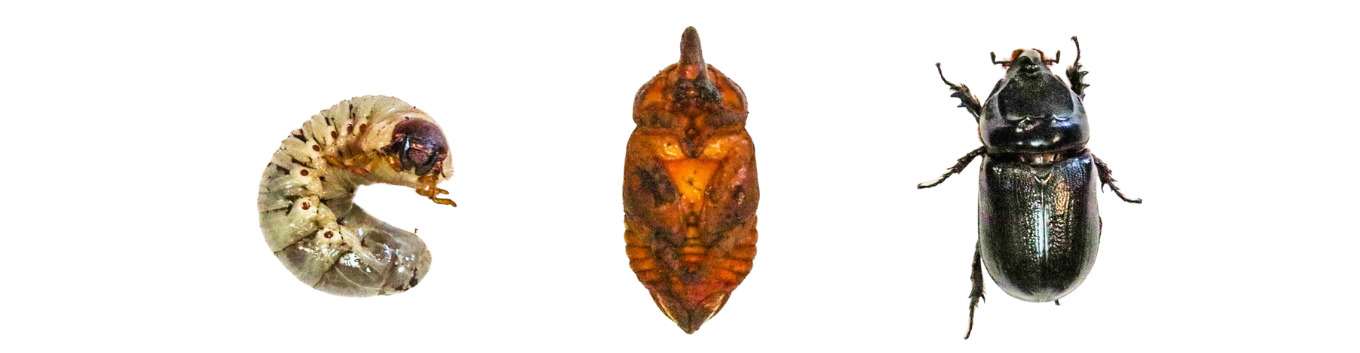
A new interim rule has been put in place to help reduce the spread of coconut rhinoceros beetle (CRB) on Hawaiʻi Island. Interim Rule 26-1, approved by the Board of Agriculture and Biosecurity, focuses on preventing the unintentional movement of CRB in host materials such as mulch, green waste, compost, and potted plants.
This rule requires commercial operations within the designated infested area to enter into a formal compliance agreement with the Hawaiʻi Department of Agriculture & Biosecurity (DAB). These agreements ensure that businesses are following best management practices to reduce the risk of spreading CRB.
Businesses subject to this rule are also required to complete a CRB detection and management training by May 1, 2026 to remain in compliance. Free trainings will be provided by BIISC and are designed to help businesses understand and implement the required best management practices.
Who needs to participate?
This rule applies to any commercial operation within the infested area that:
- Transports CRB host material
- Sells, barters, donates, or distributes CRB host material
- Receives or processes CRB host material
This includes (but is not limited to):
- Landscapers
- Nurseries
- Green waste haulers
- Tree trimming companies
- Construction and maintenance operations
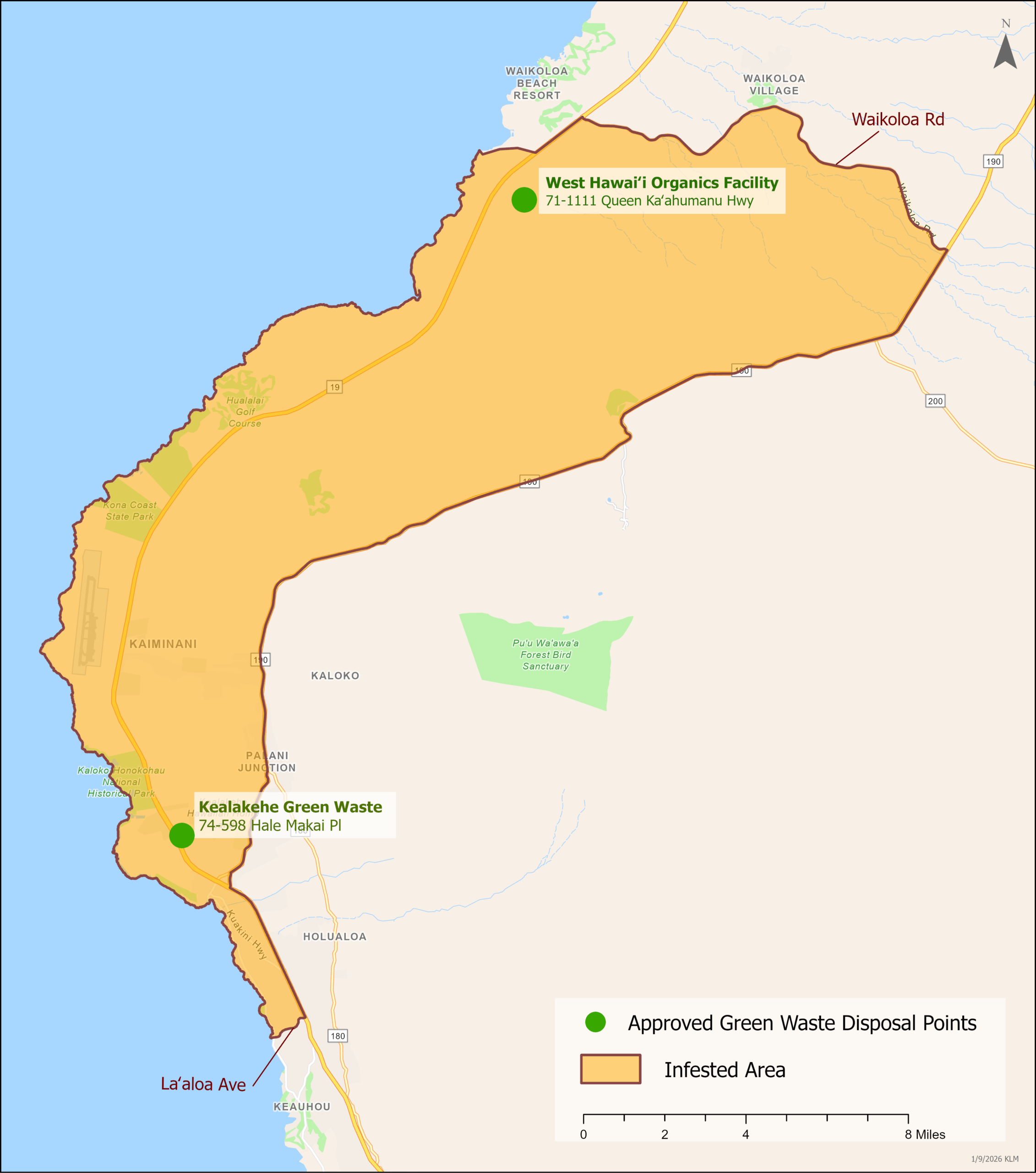
Designated Infested Area:
This temporary rule is in effect for one year and applies specifically to commercial operations that are transporting CRB host material from or within the designated infested area of North Kona.
What are the requirements?
To comply with Interim Rule 26-1, businesses must implement the following:
- CRB detection & management training for staff involved in producing or moving potential CRB host or breeding materials.
- Regular inspection and active management of mulch piles and other high-risk breeding materials.
- Inspection and/or treatment of potted plants, potting media, and palms before movement outside the defined management zone.
- Heat treatment of mulch and green waste to temperatures sufficient to kill CRB larvae before movement off-site.
- Enclosed, sealed overnight storage (sunset–sunrise) of bagged mulch intended for retail sale, corresponding with peak CRB flight activity.