What You Can Do…
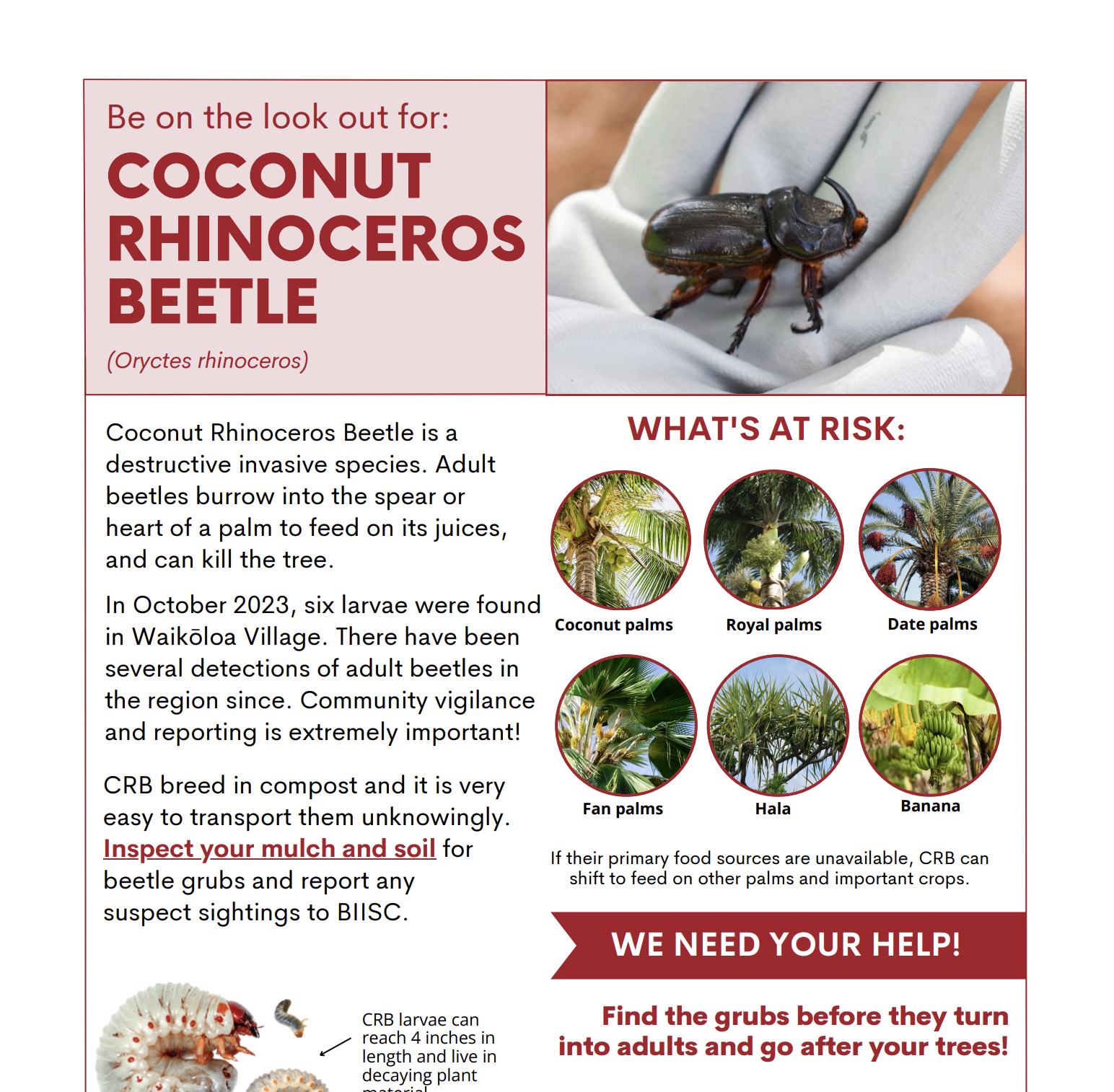
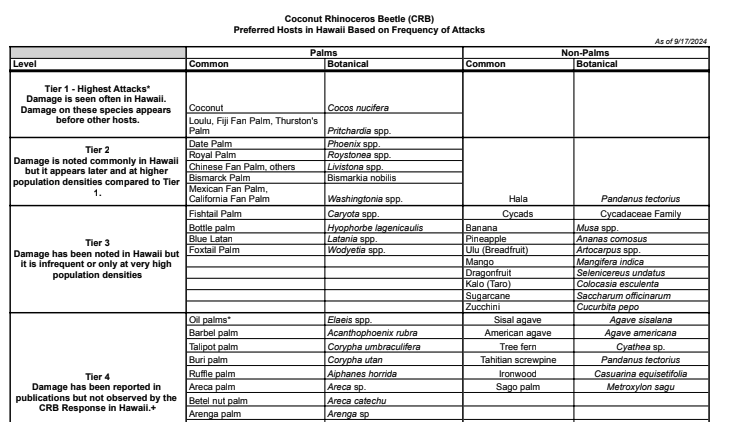
The coconut rhinoceros beetle (CRB) is a serious invasive pest that threatens Hawaiʻi’s landscapes, agriculture, and cultural resources. Its impacts extend beyond palms, affecting plants such as hala, banana, and other important species. CRB poses real challenges for residents, farmers, cultural practitioners, and the health of the ʻāina as a whole.
Addressing CRB requires an integrated pest management approach, combining multiple strategies to reduce populations and limit damage over time. While CRB is a significant and ongoing issue, there are practical steps everyone can take to help slow its spread and reduce its impacts. Properly managing green waste, protecting vulnerable plants, and supporting trapping and reporting efforts all play an important role. Individual actions, taken collectively, make a meaningful difference in protecting Hawaiʻi Island.
Proper Green Waste Management
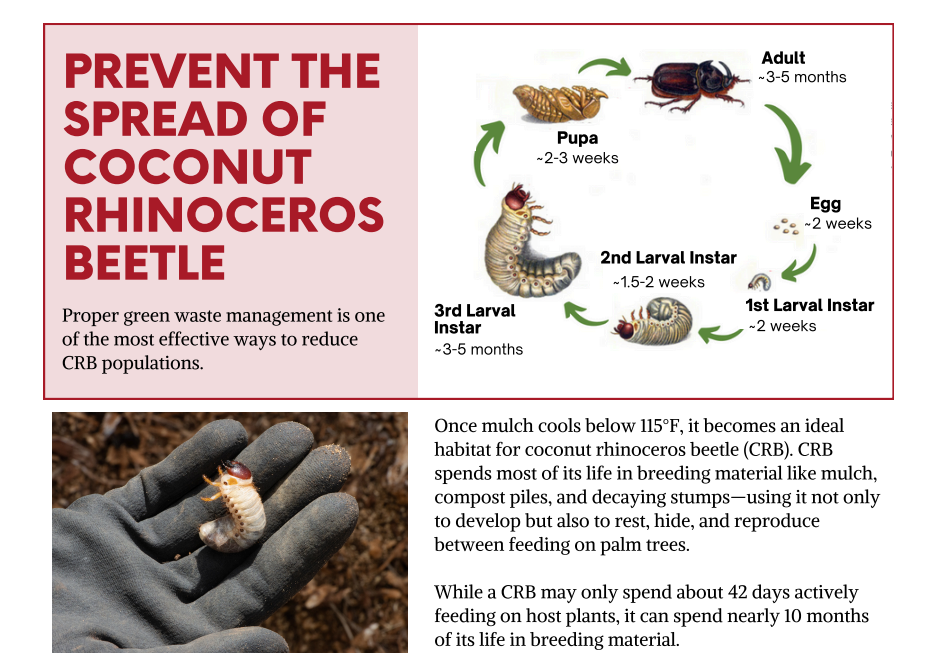
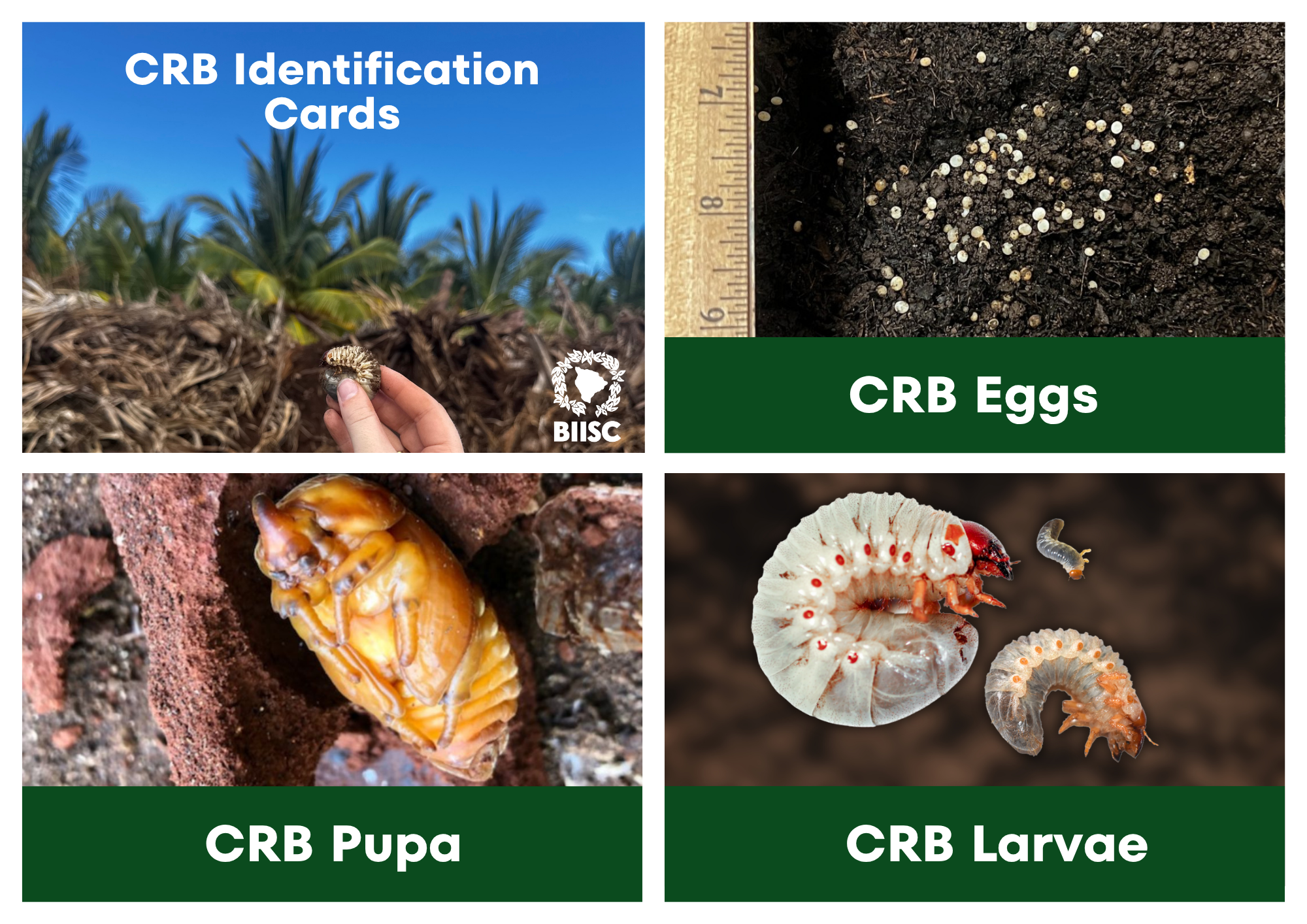
Coconut rhinoceros beetles spend the majority of their life cycle in decaying plant material such as green waste, mulch, and compost. Eggs, larvae, and pupae all develop within these materials. Adult beetles move between breeding sites and host plants, feeding on palms and other vegetation, and returning to organic material to breed and shelter when not actively feeding.
Improperly handled green waste is a major pathway for CRB spread, and small changes in how it is managed can significantly reduce breeding habitat and population growth. Proper green waste management is one of the most important ways to reduce CRB populations.
Best Management Practices:
- Do not let green waste or mulch sit for over 4 months at a time.
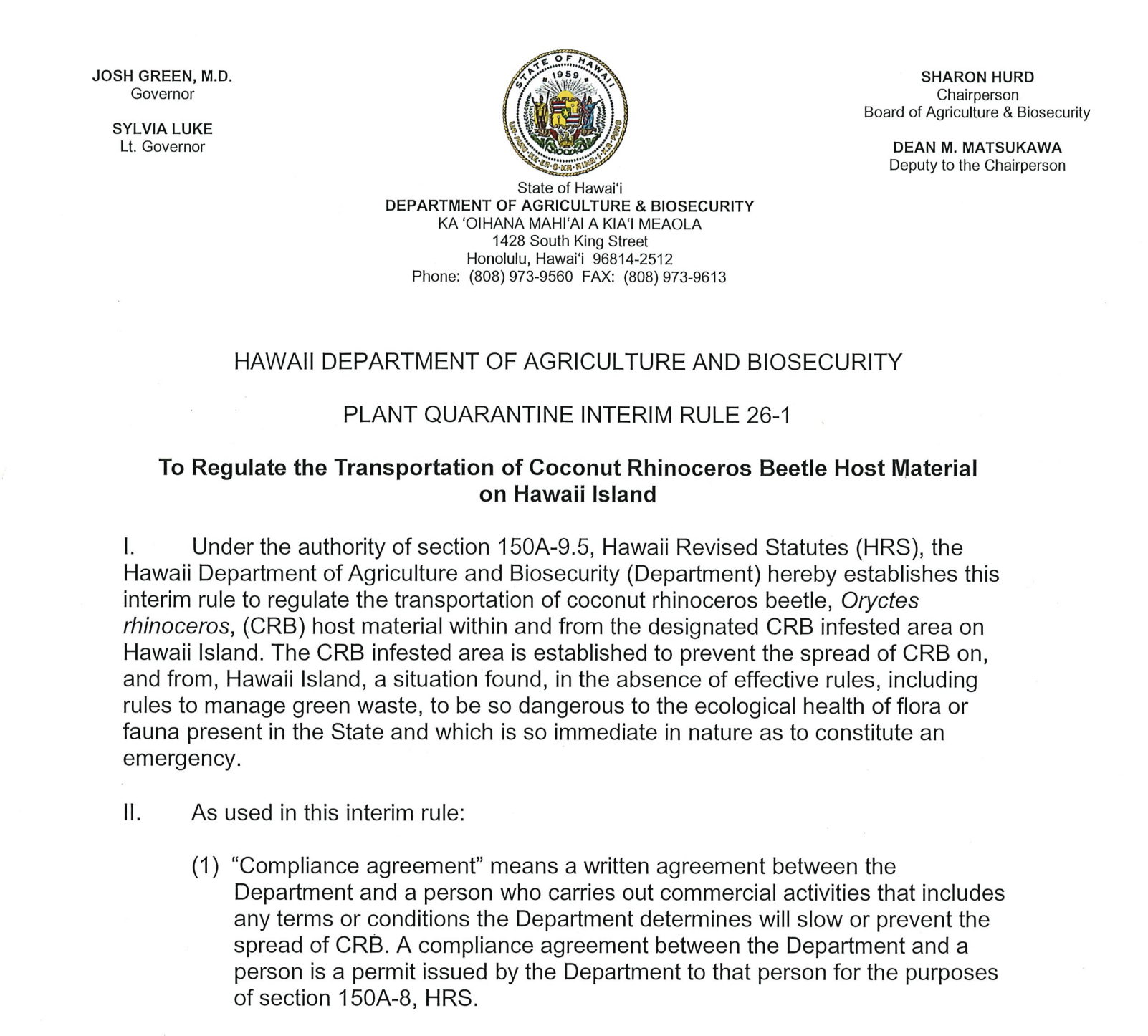
- Properly dispose of green waste at County collection sites, where it can be properly chipped and composted at a high heat, to kill all life stages of CRB.
- When possible, contain mulch, compost, and potting media in a thick, sealed container.
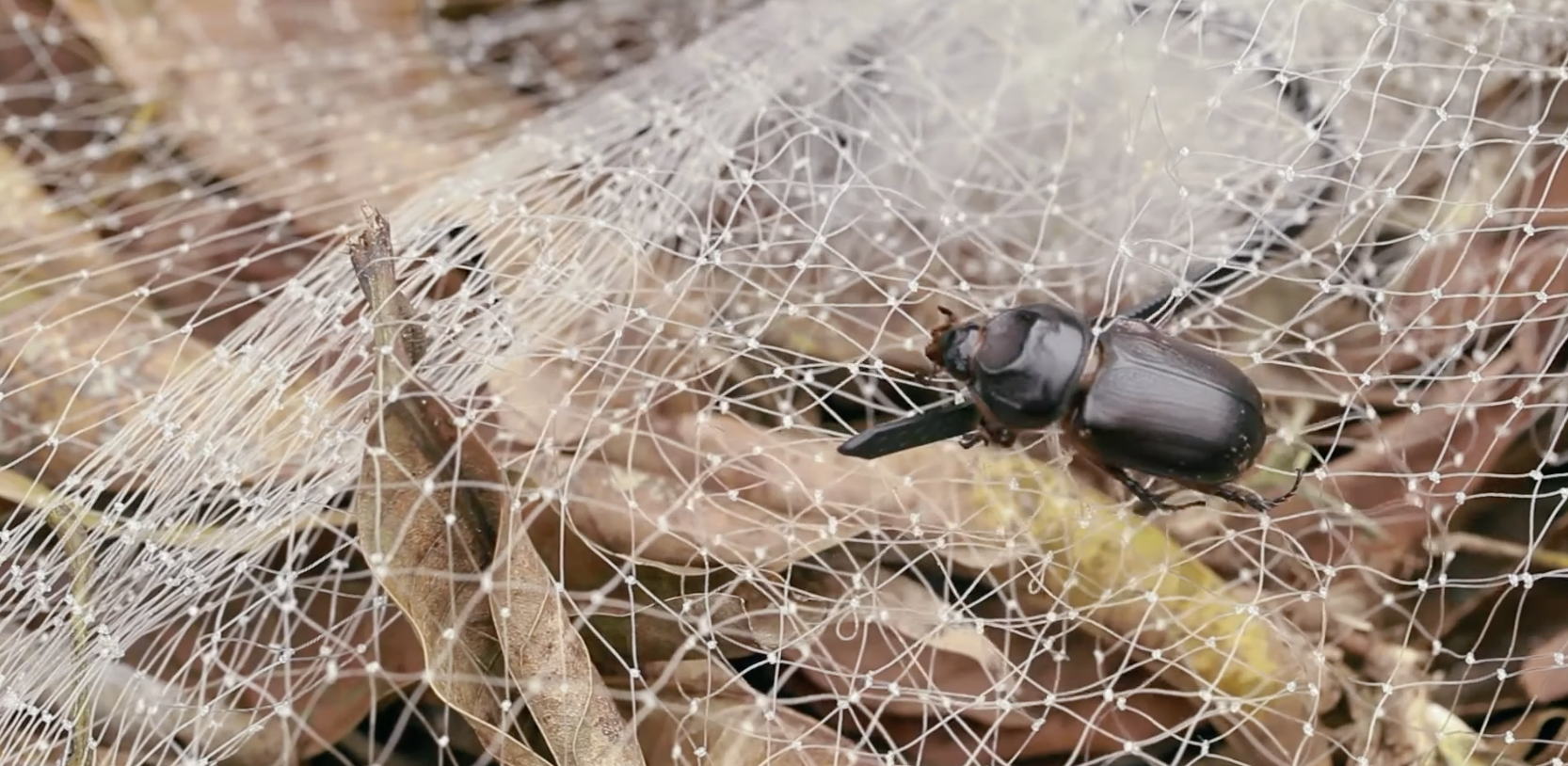
- If a pile cannot be removed, cover it with CRB netting to prevent beetles from getting in or out of the material.
- Do not illegally dump green waste.
Make Your Own CRB Trap
Trapping is an important tool for detecting and reducing coconut rhinoceros beetle populations. One effective option is a basic barrel-style trap that can be constructed using a simple list of materials.
Here’s What You Need:
- Heavy-duty trash can or barrel
- Organic material (green waste, mulch)
- Garden hose (cut to fit inside the barrel circumference)
- Monofilament netting (1/2 inch eye)
- Zip ties
- Power drill & 1/8-inch drill bit
- (Optional) Solar-powered UV LED light and/or CRB pheromone lure
Assembly Steps
- Drill entry holes – Drill six 1/8-inch holes around the side of the barrel, about 3 inches from the bottom.
- Add attractant material – Fill the barrel with organic material, leaving about 6 inches of space from the top.
- Install netting barrier – Place the netting above the organic material inside the barrel to help retain beetles once they enter.
- Add hose support ring – Fit a cut garden hose along the inner circumference of the barrel. Fold the netting over the hose and secure tightly with zip ties or cord.
- Trim and secure – Cut excess netting and ensure all components are tightly fastened.
Protecting Host Plants
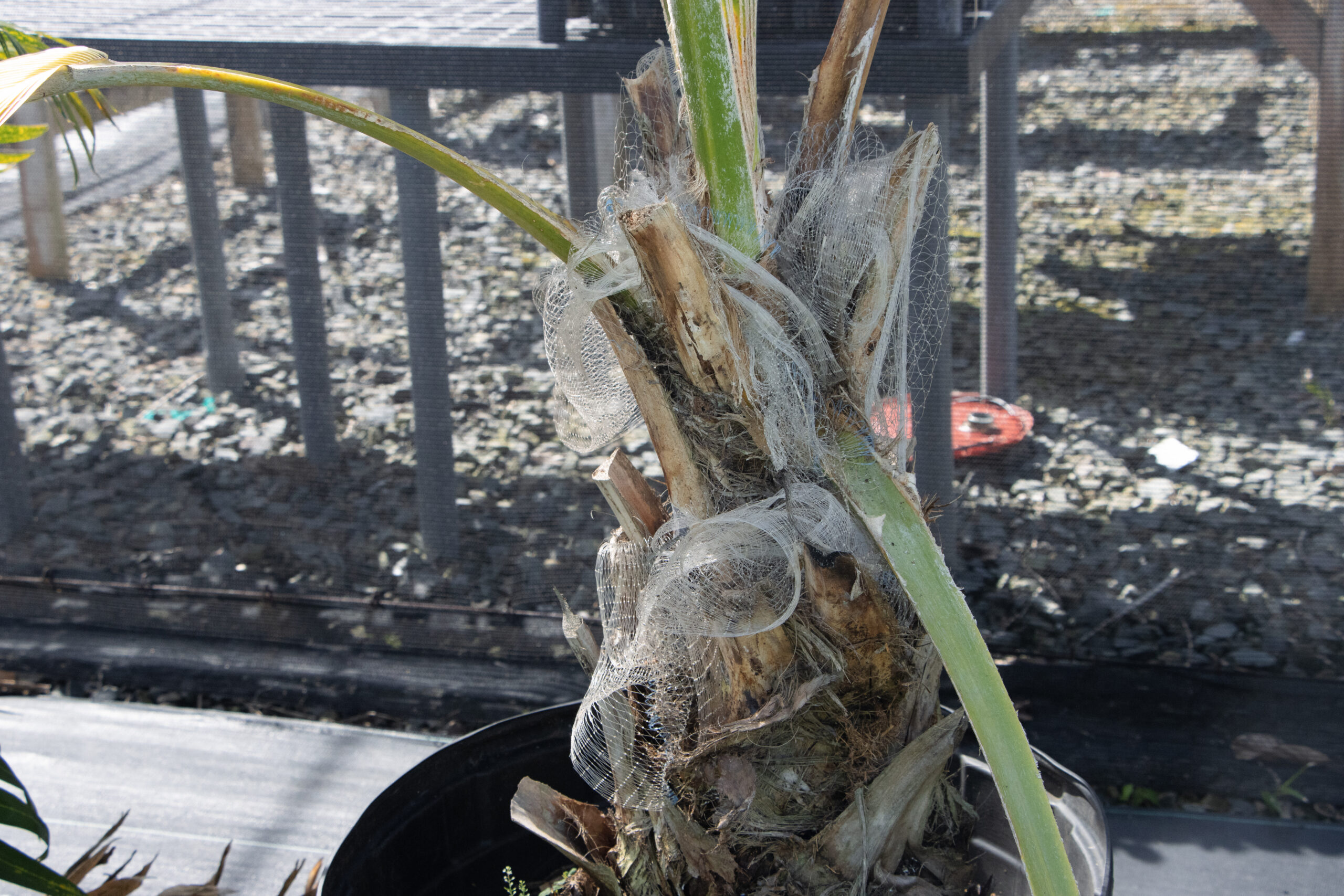
Protecting host plants, such as coconut and loulu, is an important part of a CRB control effort, especially for young or high-value plants. Targeted treatments and physical protections, like the application of netting to trees, can help reduce the severity of an infestation.
Netting:
Use monofilament netting with a ½ to 1 inch mesh size to protect the crown of the plant. Keep the netting loose and layered so beetles are more likely to become entangled; if it is pulled tight, they may be able to push through. The net should be checked and adjusted regularly as the plant grows and fronds shift, typically every 2 to 4 months as new growth emerges.
Chemical Treatments:
These methods are most effective when used as part of an integrated approach that also includes monitoring, trapping, and good sanitation practices. Majority of these treatments are intended for ornamental or non-food-producing trees, where coconuts or other plant materials are not being harvested for consumption.
Crown Application: Pyrethrin or pyrethroid pesticides can be applied to the crown, targeting the center where the spear and fronds meet. For taller palms, this may require equipment such as drones or cranes. These products paralyze CRB on contact and have low residual effect, making them most effective when recent damage or active feeding is suspected. Reapplication is typically needed every three months.
Common products include Evergreen Pyrethrum Concentrate (residential use), while others like Mustang Maxx require a restricted use license. Demon Maxx is temporarily allowed on outer islands. Always follow the product label for safe use.
Injections: Palm trunks can be injected with imidacloprid or acephate to provide longer-term protection against CRB. This method is useful in situations where drift or runoff is a concern, where tree density is high, or where palms are too tall for other treatment options.
Once injected, the pesticide remains within the plant’s vascular system, providing protection for approximately one year. Because the material stays within the tree, any flowers or fruit must be removed to protect pollinators. Trunk injections are appropriate for ornamental or horticultural palms..
Soil Drench: Soil drenching uses imidacloprid applied to the root zone, where it is absorbed and moves through the palm. This method is generally easier to apply but may result in some leaching, so it should not be used near water sources. It can also be less effective on very tall trees, and it may take time for the material to reach the crown where CRB feed. Fruits and flowers must be removed from treated trees.
Soil drenches do not immediately stop feeding damage. CRB must feed on the plant to receive a lethal dose, and in many cases multiple feedings are required to impact larger palms such as coconut. Other species, including native loulu palms, may be more susceptible to damage.