Big Island Invasive Species Committee (BIISC)

DONATE  REPORT A PEST

  • About Us
    • Who We Are
    • Steering Committee
    • What We Do
  • Invasive Plants
    • No Grow! plants
    • Backyard Pests
    • Plant Control
  • Invasive Pests
    • Insects
    • Animal Pests
    • Diseases
    • Palm Pests and Diseases
  • Community Programs
    • CRB Compliance Trainings
    • Albizia Program
    • Little Fire Ant Community Support Program
    • Education
  • Blog
  • Events

Search Results for: rubus

Himalayan Raspberry

rubus_ellipticus leaves

Himalayan Raspberry

Rubus ellipticus, or Himalayan raspberry, is a thorny invasive shrub native to the Indian subcontinent and parts of Southeast Asia. It was originally brought to tropical regions as an ornamental plant, but quickly escaped cultivation and spread into natural areas. In Hawaiʻi, it can be found in wet forests and pastures, especially in the Volcano and Laupāhoehoe regions. The shrub produces vigorous stems that set seed in their first year, then flower and fruit in the second, with clusters of bright yellow-orange berries. These traits, along with its dense thickets of sharp thorns, make it a difficult plant to manage once established.

Himalayan raspberry is particularly aggressive in disturbed lands, where it outcompetes native plants and forms impenetrable thickets. It spreads both by underground runners and by seeds, which are easily dispersed when birds eat its fruit. This dual strategy allows it to spread rapidly across landscapes, threatening Hawaiʻi’s native ecosystems and creating challenges for landowners and ranchers. Because of its impacts, it is listed as a noxious weed in Hawaiʻi.

Impacts:

  • Forms dense thickets that block light and outcompete native plants
  • Tolerates deep shade and grows into the forest midstory
  • Yellow fruit is dispersed by pigs and frugivorous birds
  • Anywhere the cane touches the ground, a new plant can root and spread
  • Sharp and numerous thorns pose a physical risk to people and animals

Description:

  • Grows up to 15 feet tall 
  • Leaves are trifoliate with elliptical leaflets that are green above and silvery-white underneath
  • Stems are covered with small, sharp prickles
  • Produces yellow-orange aggregate fruits 
  • Often found between 2,200 – 5,500 feet elevation in wet and mesic forests

Himalayan Raspberry (Rubus ellipticus)

rubus ellipticus growth habit
rubus ellipticus closeup of thorns

Photos: BIISC

Controlling Himalayan Raspberry:

Physical control: This invasive species can be managed through physical removal, but it requires persistence. Plants should be cut back to just a few inches from the ground to expose the canes. Because this species resprouts from underground roots, follow-up is critical—monitor sites regularly and repeat cutting as needed. Protective gear such as heavy-duty gloves and cutting tools are essential, since the dense thickets and sharp thorns make clearing difficult. Some communities, like Fern Forest, even organize tool-sharing programs to support landowners tackling infestations.

Chemical control: Herbicides should only be applied when the weather is clear, ideally for a few hours before and after treatment. Cut back the primary canes to about 1–2 inches above the ground and immediately spray—just enough to coat the cane without dripping. Runners and resprouts may need separate treatment. Because the plant can take up to a year to die completely, monitor the site and retreat as necessary. Always follow label instructions, wear protective gear, and take care to protect the surrounding environment.

  • Application method: cut-stump application 
  • Effective herbicides:
    • Brush Killer Plus Concentrate (Triclopyr ester 8.8%) – label
    • Triclopyr 4 (for agriculture use only) – label. Mix at a 30% dilution with forest crop oil.
=

Coqui Frogs

Coqui Frogs

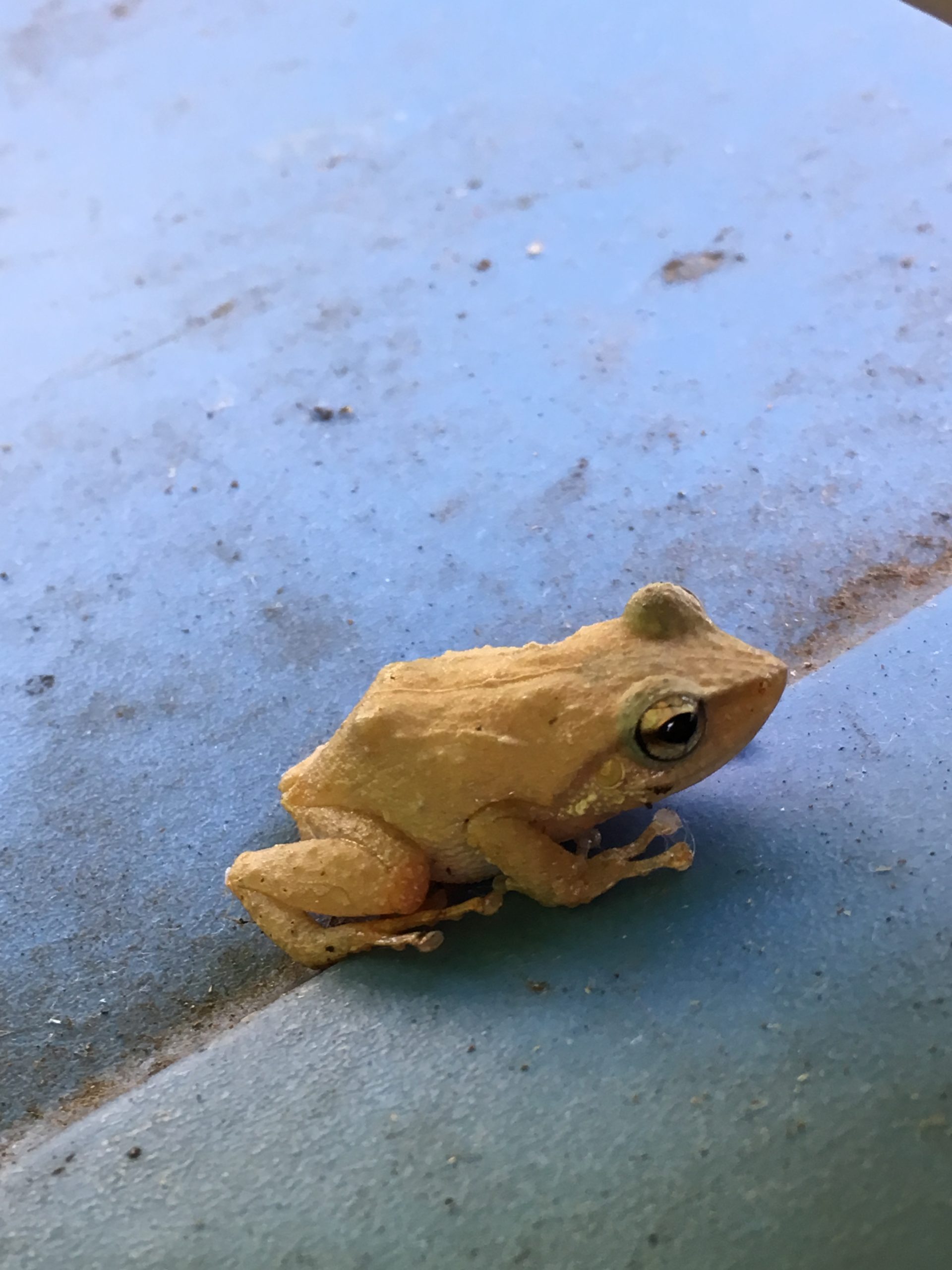
Coqui Frogs were accidentally introduced to the Big Island in the late 1980’s on imported nursery plants. Beloved in their native Puerto Rico, coqui in Hawai‛i lack the natural predators that keep their population in balance, and their numbers quickly exceeded the population densities of their home range.  On Hawai‛i Island, coquis are recorded to reach densities as high as 2000 frogs per acre, more than twice the number found in similar areas in the Caribbean.

Hawai‛i evolved with no native terrestrial amphibians, and the natural ecosystem here is not adapted for their presence. Coqui are voracious eaters and although they will consume any insect they find, most of their forage time is spent in leaf litter looking for their invertebrate prey, which may be introduced or native.  As many of our native invertebrates are already threatened by reduced habitat, coqui pose a troubling threat to our native ecosystems.  Studies have shown they eat most crawling insects, not mosquitoes, as once had been hopefully suggested. Many homeowners throughout Puna have reported that high-density infestations of little fire ants will reduce populations of coqui frogs, although these residents also indicated that this benefit was not enough to tolerate fire ants.

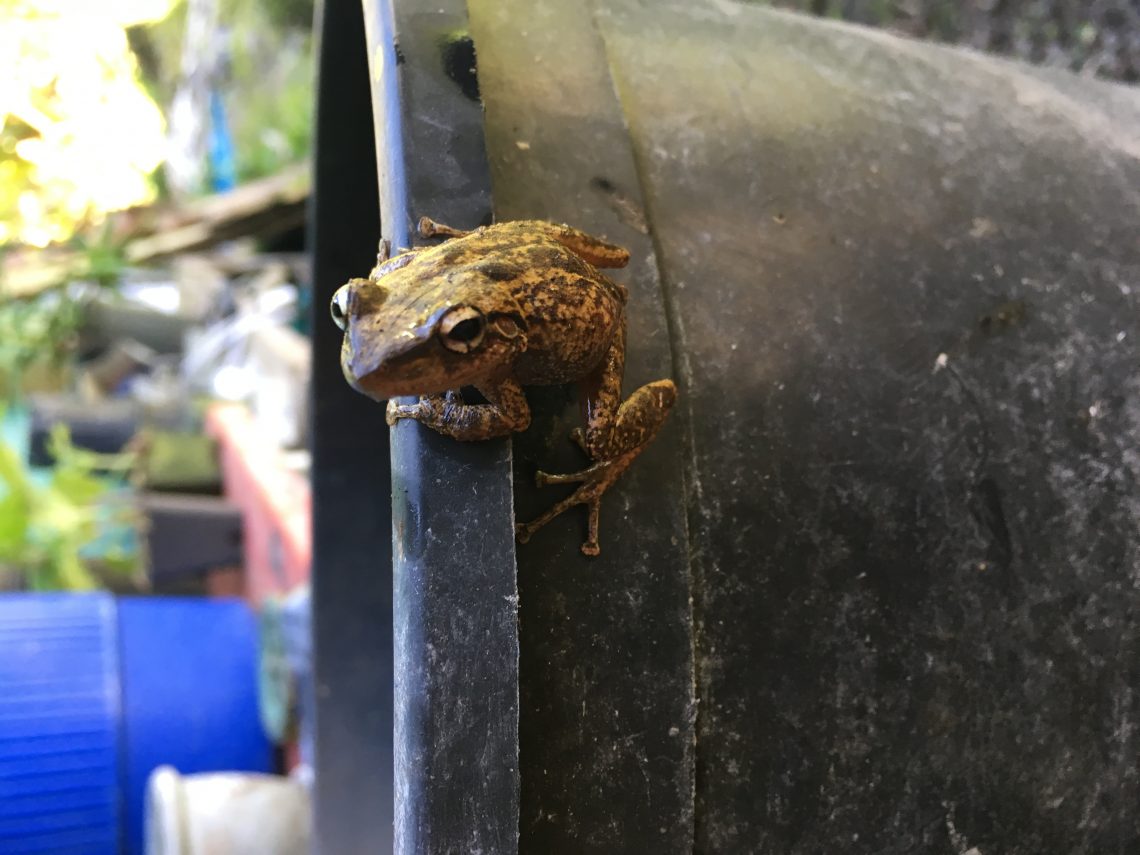
Coqui (Eleutherodactylus coqui)

Coqui adult
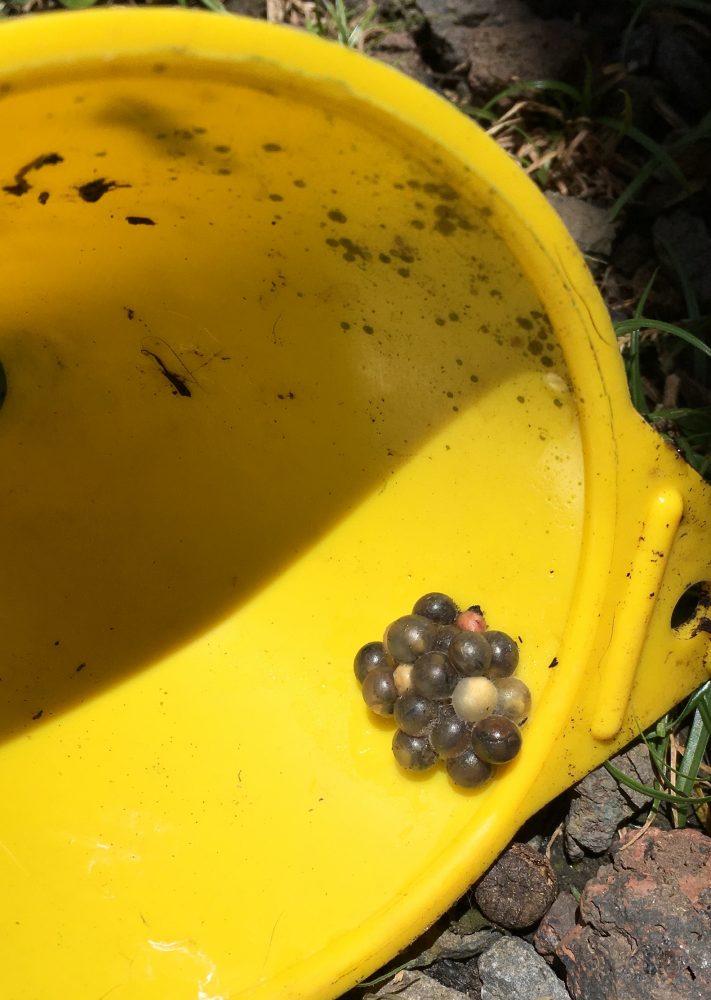
Coqui egg cluster
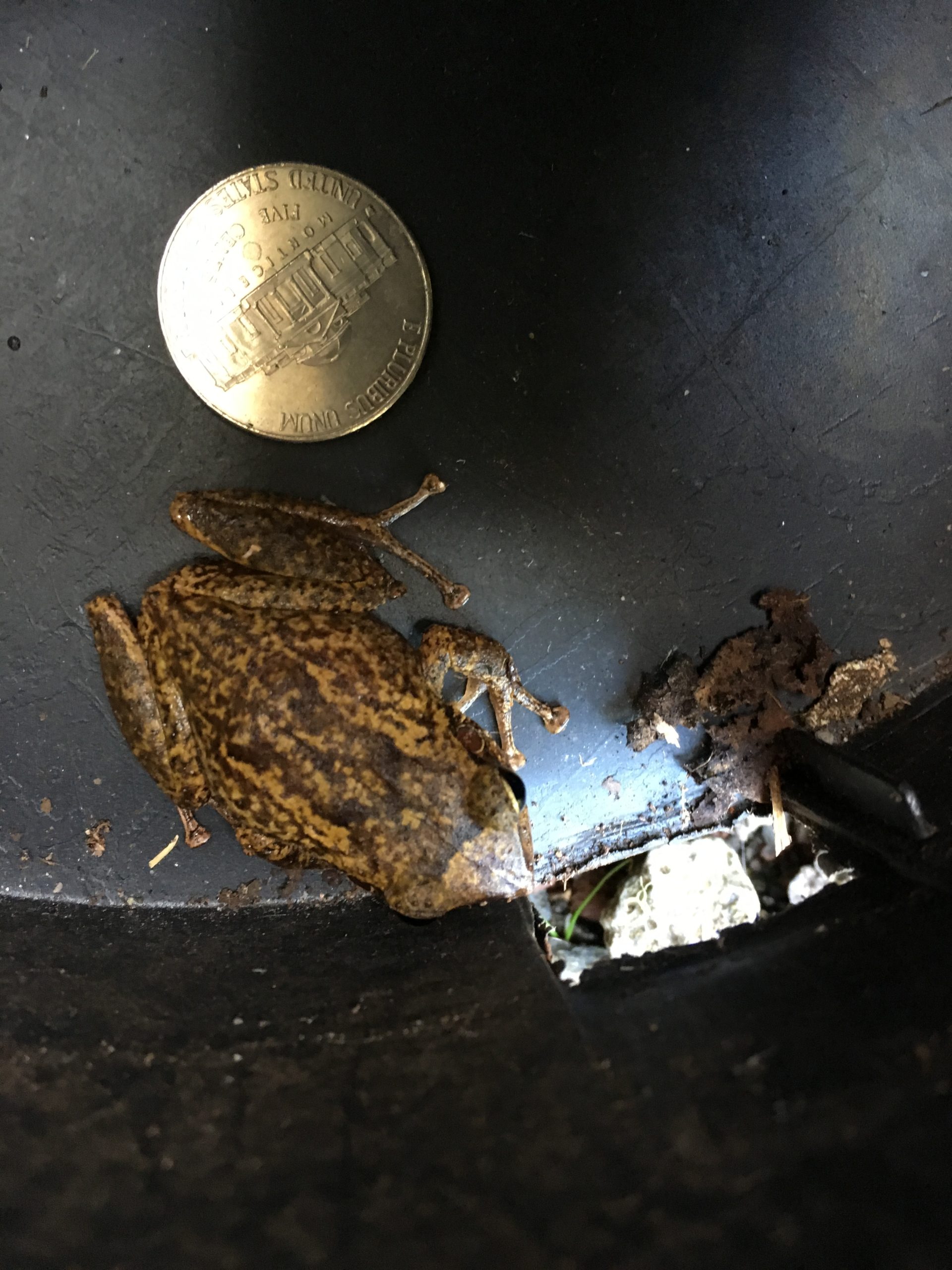
Size comparison with nickel

Photos: BIISC

The distinctive “KO-kee” call that gives the frog its name can reach 100 decibels, louder than many power tools and lawn equipment, and can be very disruptive for residents in infested areas.  The males will call from dusk to dawn to ward off competitors and attract a mate. In the morning, the frogs retreat to the ground and look for moist, shady areas to spend the day. Homeowners in highly infested areas have reported that in recent years, coqui will even call on overcast days or from heavily shaded areas.

Coqui have completely invaded most of East Hawai‛i from Glenwood to Kalapana and throughout North Hilo, with dozens of smaller populations sprinkled throughout the rest of the island. They are tree frogs but are capable hitchhikers who have evolved to move with human belongings as we travel from place to place. Although potted plants are the most common route of spread for many invasive plants, coqui are known to travel in garbage cans, vehicles, camping equipment, and whatever they can cling to! Reducing habitat, enacting vigilant biosecurity, and working with your neighbors is the best way to prevent or control a coqui infestation in your neighborhood.

Description:

  • Adults are about 1 inch long, females can be closer to 2 inches
  • Varrious shades of brown
  • Varrious patterns, stripe down the middle of the back, mottled, no pattern
  • Lays egg clusters in moist damp areas, males sit on eggs

Impacts

  • Loud “KO-kee” that can reach up to 100 decibles
  • Eats a large amount of insects, desrupting the balace of native ecosystems
  • Decreaces property value

Controlling Coqui Frogs

Traps

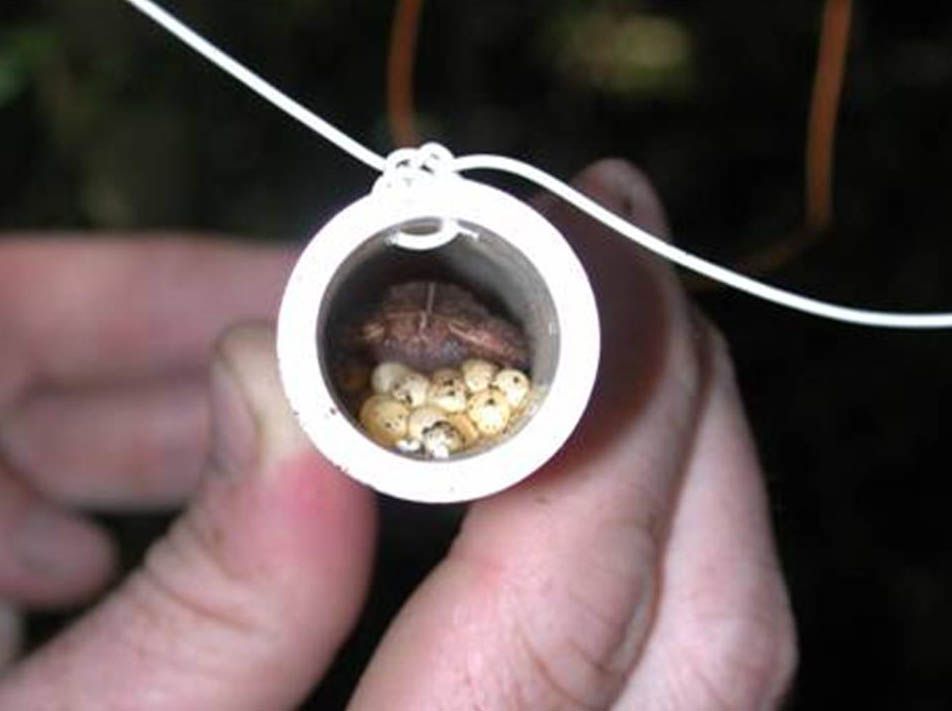
Traps take advantage of the frog’s nesting behavior. Frogs seek dark, damp areas for shelter. Lures help reduce populations by giving the frogs a place to nest and allowing you to collect eggs and adults. Multiple lures are recommended in areas with high frog density.

  • Connect an 8″ length of 3/4″ diameter PVC pipe to a t-connector joint.
  • Place trap 3-5 feet high on local vegetation. Check traps during the day at least every 2 weeks. Can check more frequently if you want.
  • Remove any adults and eggs into a plastic bag and freeze to kill.

Photo: CTAHR-UH Mānoa

Citric Acid

Citric acid is the only product labeled for controlling coqui in Hawaii. Frogs breathe through their skin so they are highly sensitive to chemical contact. Spray solution on infested plants to kill coqui frog eggs, juveniles, and adults. Treatments can be repeated every 2 weeks.

  • Standard Spray Bottle: 1/2 c citric acid + 32 oz water
  • 1 gallon hand pump sprayer: 2.25 c citric acid + 1 gallon water
  • 5 gallon backpack sprayer: 11.25 c citric acid + 5 gallons water

Spray foliage at night when coqui are actively calling, foraging or mating. Drench ground and slowly work your way up into the canopy. Thoroughly spray to cover the vegetation where frogs perch, including the undersides of leaves. Citric acid can burn sensitive plants, such as ferns and orchids. To avoid damage, rinse treated sensitive plants with fresh water 1 hour after spraying to remove citric acid residue.

*Note: When mixing and applying citric acid make sure to wear proper PPE (long-sleeves, pants, shoes, eye protection, and gloves) when spraying. Do not store the citric acid solution as it will corrode your plastic sprayer. Spray out all mixed solution and rinse with water after use.

This video from the North Kohala Community Resource Center goes over techniques for controlling coqui

Resources

  • Kohala Coqui Coalition from Derrick Owens on Vimeo.
  • Download our brochure for handy tips on controlling coqui: Coqui Brochure (Final)

If you are on any other island in Hawai‛i and see or hear a coqui frog, please report it immediately to your local ISC, the Hawaii Dept of Agriculture, or 643-PEST. 

Molucca Raspberry

Molucca Raspberry

Containment Species: Report if seen outside of Mountain view

Molucca Raspberry is native to Japan, southern China, and Okinawa. Populations were discovered growing in the upper Puna region of Hawaii island. BIISC has monitored the plant since 2016, and the population spread is relatively slow, primarily by vegetative reproduction. Fruit is rarely observed, and bird dispersal of seeds is a rare occurrence. A state noxious weed, it is illegal to introduce or sell this species.

Impacts:

  •  Invades forests, open fields, and freshwater habitats
  • Forms dense impenetrable thickets that crowd out native plants and make it difficult for hunters and hikers to travel through the forest
  • Reproduces after cutting, from root suckers, and vegetatively
  • Resprouts after herbicide treatment
  • Hybridized with other Rubus species

Description:

  • A scrambling shrub
  • Has thorns and is covered in hair
  • Round, serrated leaves; the lower surface has white to yellowish-brown hair. (Most Rubus species in Hawaii have compound leaves)
  • White flowers have 5 petals forming a circle

Molucca Raspberry (Rubus sieboldii)

Rubus sieboldii

Photos: BIISC

BIISC’s Control Efforts

Since 2016, BIISC staff has controlled more than 85,000 Moluccan raspberry plants! Sadly, that hasn’t made enough of an impact to justify our efforts. Young juveniles are pulled out and hung on a tree or fence to prevent vegetative reproduction. Older plants are controlled with herbicides. However, because this plant grows in thickets and within tall grasses, often only the top part of the plant can be reached. Because of that, control is very difficult.

References


Molucca raspberry profile from Plant Pono
Molucca raspberry profile from Pacific Island Ecosystems at Risk (PIER)

Big Island Invasive Species Committee (BIISC)

23 East Kawili Street, Hilo, HI 96720
(808) 933-3340


biisc@hawaii.edu

Sign Up to Receive Updates

Sign Up!

PCSU logo

Copyright © 2026 Big Island Invasive Species Committee (BIISC) · Sitemap · Designed by Websites with Aloha · Log in